





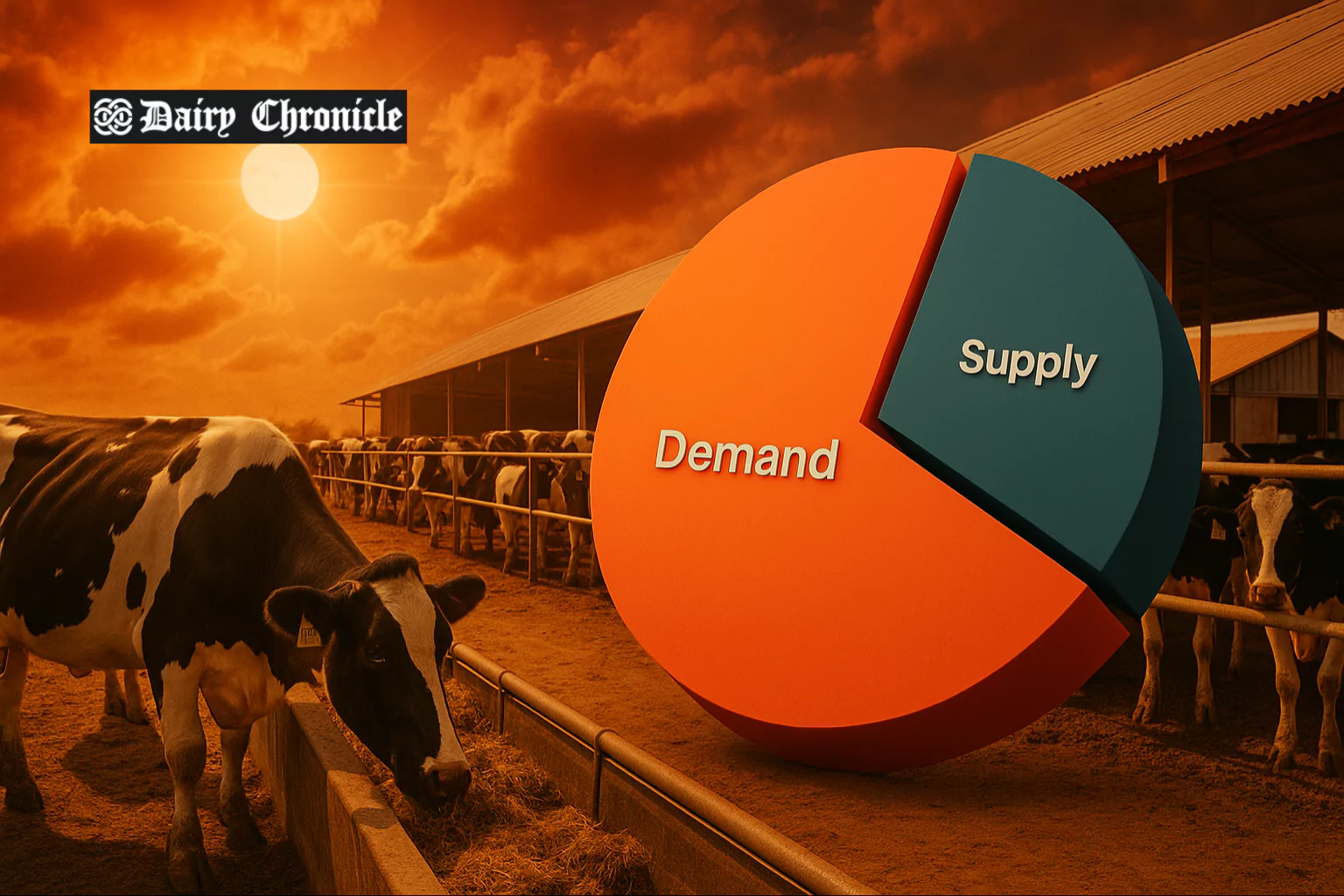
The world is headed toward a significant milk shortage, driven by rising demand in developing countries, production imbalances, and climate change. This looming dairy deficit could severely impact nutrition and economic growth in vulnerable regions unless urgent steps are taken to improve efficiency and sustainability in the global dairy sector.
Milk, long hailed as the foundation of early-life nutrition, is becoming a focal point of concern for economists and policymakers globally. Producing nearly one billion metric tonnes annually, milk outpaces even wheat and rice in volume. However, the world now faces a critical imbalance: while demand for dairy is accelerating, especially in developing countries, supply remains heavily skewed toward regions with shrinking young populations.
At the heart of this issue is a troubling forecast: by 2030, the world could face a milk shortfall ranging from 10.5 million to 30 million tonnes. For countries across South Asia, Southeast Asia, and sub-Saharan Africa, where child malnutrition and stunting are widespread, this dairy drought could stall socio-economic development.
Demand Surging in Developing Economies
Dairy consumption is projected to grow faster than any other agricultural commodity over the next decade. Economic upliftment in countries such as India, Indonesia, and regions across Africa is enabling broader access to protein-rich diets. As incomes rise, dairy consumption follows — a trend tied closely to improving educational and health outcomes in younger populations.
From a macroeconomic perspective, milk is no longer just a food product but a proxy indicator of development. Yet, over 90% of children under four live in developing countries, while these nations produce only about 50% of global milk supply.
Supply Remains Concentrated in Developed Regions
The structural issue lies in the geography of dairy production. Europe alone accounts for nearly 25% of global output, while countries most in need continue to rely on imports or inefficient local production. Global trade in dairy, particularly whole milk powder (WMP), accounts for just 2% of all raw milk produced, revealing the limitations of relying on exports to meet rising demand.
As dairy prices climb — particularly in high-demand regions — affordability is becoming a pressing concern. In India, for instance, where the dairy sector is one of the most fragmented globally, the industry faces unique inefficiencies. Religious beliefs have resulted in over five million stray cattle, inflating costs and reducing herd productivity. A shift towards more buffalo dairying and intensive yield-driven farming could help alleviate this burden.
Climate Change Adds Further Strain
The impact of climate change cannot be overstated. Recent studies show that extreme heat can reduce milk yields by up to 10%, further limiting supply in tropical and subtropical countries. Moreover, dairy is both a victim and contributor to global warming. Livestock emissions contribute 2.1 billion tonnes of CO₂ annually, placing the sector among the largest agricultural polluters.
What exacerbates this further is the carbon intensity of dairy production in emerging economies. Due to outdated and low-tech farming practices, the carbon footprint of a liter of milk in Africa or South Asia is three to four times higher than in mechanized Western farms.
A Financial Perspective: Rethinking Dairy Investment
From an investment standpoint, this evolving dairy gap presents both challenges and opportunities. On the one hand, rising prices will likely inflate input costs for food processors, reduce margins, and cause volatility in dairy futures markets. On the other, there’s a potential for green investment in sustainable dairy infrastructure.
Capital reallocation toward efficient dairy practices, precision farming, and animal health innovation could create long-term returns — both financially and socially. Emerging market governments and private equity firms should consider dairy not merely as a nutritional good, but as critical infrastructure for economic resilience.
Path Forward: Sustainability, Not Substitution
While plant-based alternatives can ease pressure in affluent economies, the focus in developing regions must remain on enhancing productivity per animal rather than reducing consumption. Countries like Brazil and China, with the resources to scale up industrialized dairy, must transition to low-emission, high-efficiency models.
Meanwhile, global policymakers must resist any push to disincentivize dairy access in developing nations. Any reduction in milk availability will disproportionately affect the most vulnerable populations — the very people whose economic futures depend on proper childhood nutrition.


