






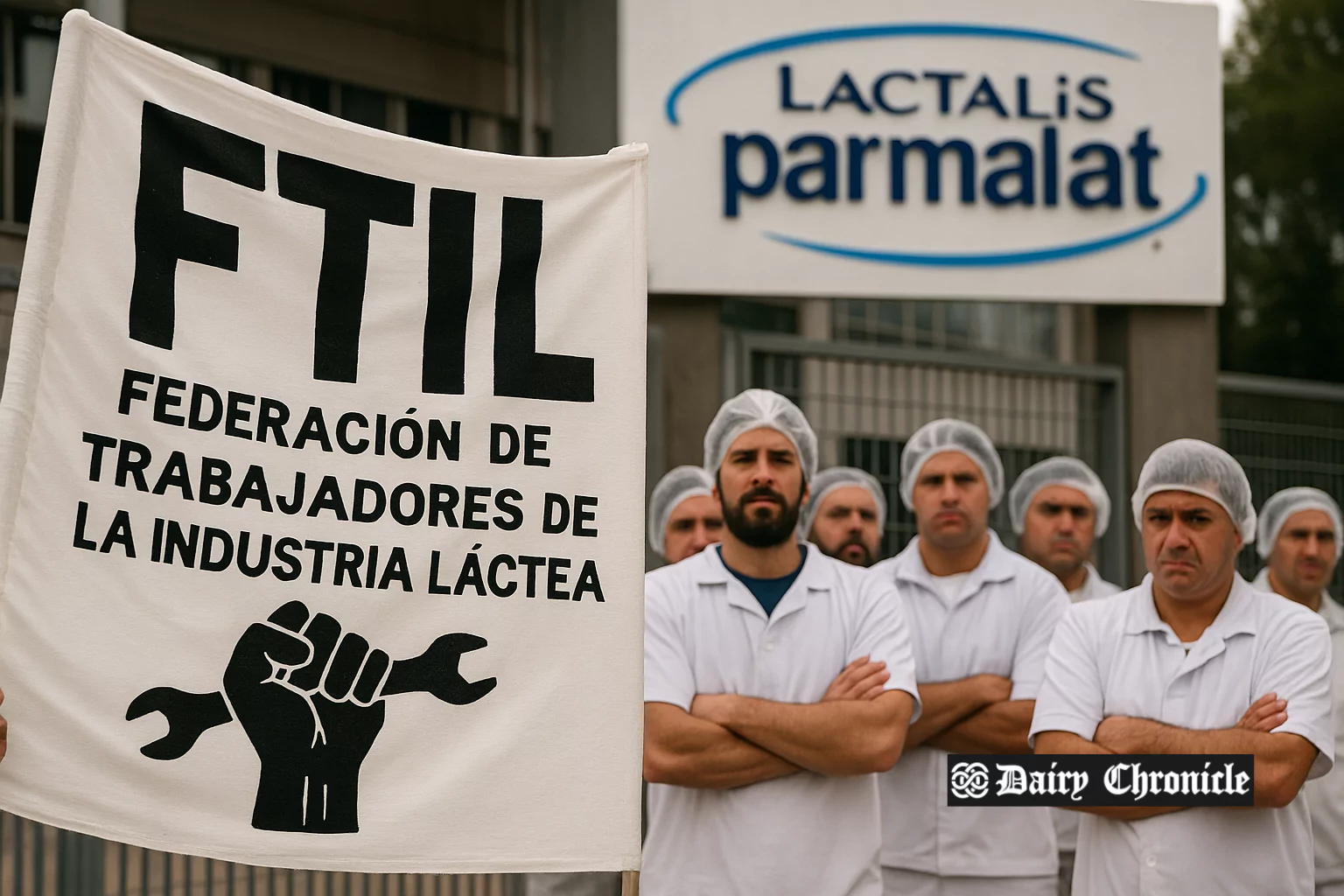
In Uruguay’s Colonia Department, the Federation of Dairy Industry Workers (FTIL) has publicly criticized Lactalis Parmalat—a subsidiary of the French dairy giant Lactalis Group—for not honoring agreements reached during collective bargaining. FTIL has demanded the reopening of the Cardona plant, citing unfulfilled promises related to job protection and production continuity in the dairy sector.
The Federation of Dairy Industry Workers (FTIL) in Uruguay’s Colonia Department has issued a sharp rebuke to Lactalis Parmalat for failing to uphold commitments made during collective bargaining negotiations. The dispute centers on the closure of the Cardona processing plant, which once produced serum, powdered milk, and butter.
Lactalis Parmalat, part of the France-based Lactalis Group, is one of the largest dairy firms in the world and has operated across South America through acquisitions and local subsidiaries. Despite previous commitments to maintain operations and employment levels at the Cardona facility, FTIL claims that Lactalis has neglected its obligations under agreements reached with the Ministry of Labour and the Ministry of Industry.
FTIL has expressed hope for a meaningful response from the company during a scheduled meeting on June 18, 2025. The union demands a “serious, concrete, and real” commitment from Lactalis regarding the plant’s reopening. Union leaders assert that without firm assurances, workers will escalate their actions—possibly halting the acceptance of essential raw materials such as serum, cream, and other dairy inputs by June 20.
Should negotiations continue to falter, FTIL has announced plans to convene with affiliates from SOGRAP and GROINCA in Juan Lacaze, a neighboring town, to coordinate further steps. The federation has emphasized the broader economic implications of layoffs and factory closures in Uruguay’s already strained dairy industry.
The situation highlights growing labor unrest as multinational corporations balance global operations against local employment concerns. FTIL continues to advocate for protections for dairy workers and the safeguarding of regional production infrastructure.


