





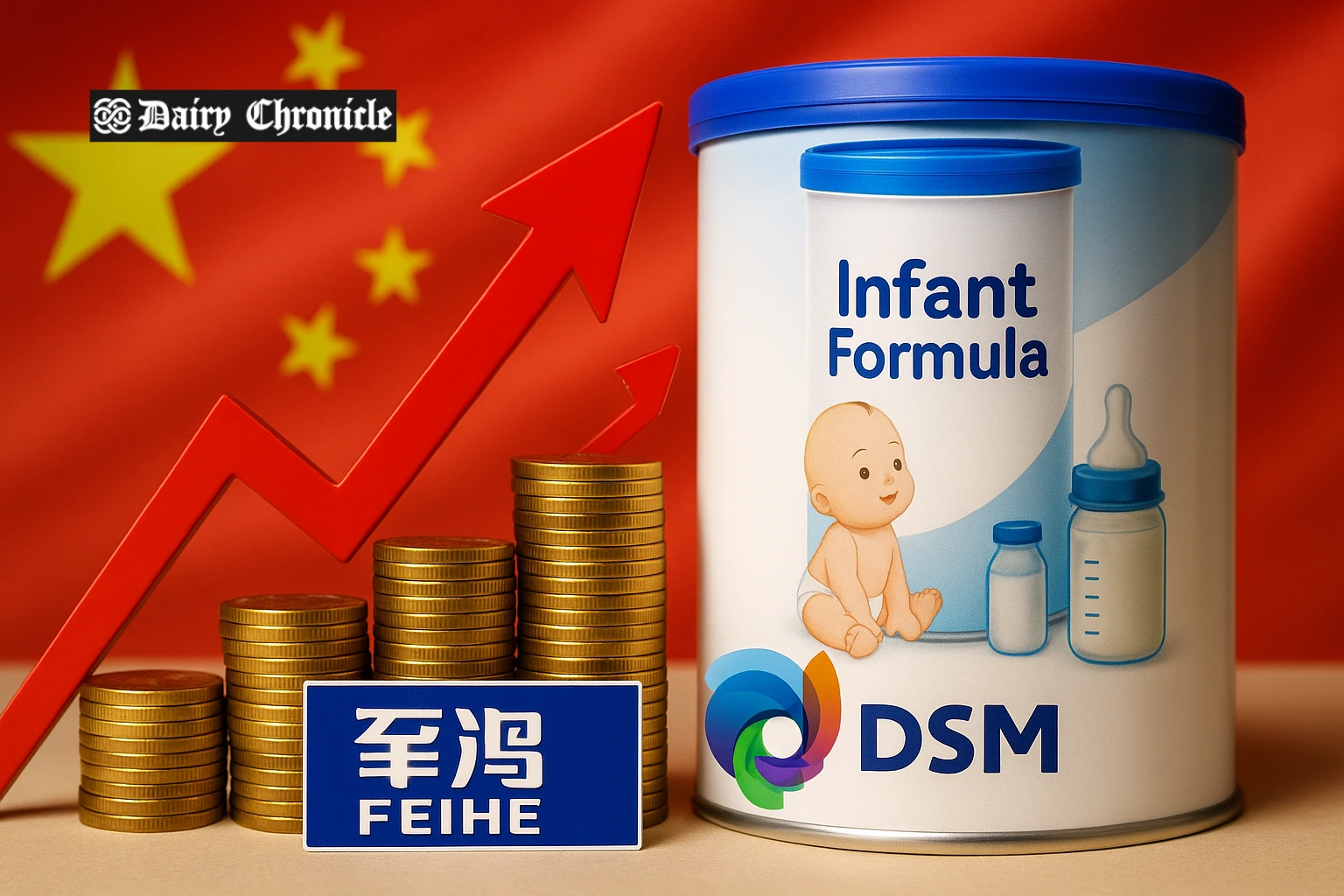
China’s rising birth rate is triggering a resurgence in the dairy and biotech sectors, with infant formula demand surging due to government subsidies and shifting demographics. Strategic interest is growing in European biotech companies with patents in Human Milk Oligosaccharides (HMOs) and in undervalued Chinese dairy stocks. Major players like Feihe, Yili, and DSM are now key actors in a race to dominate the infant nutrition market.
China’s resurgent birth rate is breathing new life into the dairy and biotechnology sectors, presenting fresh investment opportunities both domestically and abroad. In 2024, the country recorded 9.54 million births, up by 520,000 from the previous year—driven largely by robust state subsidies and targeted consumer incentives.
Key players like Feihe, China’s leading infant formula brand with a 17.5% market share, have reported strong growth, with 2024 revenue rising by 6.2% and net profits climbing 11.1%. The company’s RMB 1.2 billion formula subsidy program and regional incentives such as Hohhot’s RMB 3,000 dairy coupons have significantly lifted demand for infant nutrition products.
Behind this momentum lies an emerging ingredient: Human Milk Oligosaccharides (HMOs)—immune-supporting compounds that mimic those found in breast milk. These premium ingredients are reshaping the competitive landscape of infant formula.
Europe’s Biotech Surge: The HMO Gold Rush
European biotech firms are leading the HMO race, making them key beneficiaries of China’s formula boom:
- Jennewein Biotechnologie (Germany): A leader in microbial fermentation and enzyme synthesis, the company holds over 30 patents and boasts an HMO 3.0 platform that cuts production costs by 40%, making it highly competitive in China’s price-sensitive market.
- Glycom A/S (Denmark): Specializing in sialic acid-rich HMOs, Glycom has partnered with Yili—China’s largest dairy—to develop high-performance infant formulas.
- DSM (Netherlands): With a robust fermentation pipeline and the acquisition of a US-based HMO startup in 2023, DSM now offers 12 HMO variants. Its scale and diversification position it well for long-term growth.
CLSA analysts note that HMO-enriched formulas fetch a 20–30% premium, making them an essential differentiator in a fiercely competitive, subsidy-driven market.
China’s Dairy Sector: Undervalued but Poised for Takeoff
China’s domestic dairy firms are also drawing attention due to attractive valuations and strong policy tailwinds:
- Yili Group: Trading at a P/E ratio below 15, the brand continues investing in R&D and sustainability, including carbon-neutral milk initiatives.
- Mengniu Dairy: As a consistent performer, Mengniu is positioned to benefit from urbanization and the expanding National School Milk Program, which aims to reach 50 million students by 2027.
- Feihe: Though aggressive subsidies have squeezed margins, its 6% revenue growth underlines strong market execution.
China’s $74 billion dairy market is projected to grow to $91 billion by 2030, supported by urbanization, e-commerce, and government nutrition programs.
Investment Insights and Cautions
European HMO Bets
- Invest in scalable players like Jennewein and DSM.
- Avoid smaller, high-cost producers facing logistical barriers, such as Morinaga in Japan.
Chinese Dairy Stocks
- Yili and Mengniu offer robust fundamentals and policy support.
- International brands like Danone and A2 Milk are likely to struggle with pricing and regulatory headwinds in China.
Risks to Watch
- Policy Dependence: If birth subsidies are scaled back, growth could stall.
- Input Volatility: Global fluctuations in milk and soy prices could erode margins.
- Regulatory Barriers: Strict Chinese health and safety laws may delay new product approvals for foreign players.
Conclusion: A Baby-Driven Bull Market
Each 1% rise in China’s birth rate translates to a $4 billion boost in infant formula demand. Combined with HMO market growth projected at 9.9% annually, the sector is brimming with opportunity. As Goldman Sachs notes, HMO adoption alone could lift China’s GDP by 0.1–0.3% per year—a figure too compelling for investors to ignore.
For those seeking to capitalize on global nutrition trends, China’s baby boom is more than a demographic headline—it’s a strategic pivot point for dairy and biotech innovation.


