





A breakthrough in dairy agritech has emerged from New Zealand, where organic dairy farmers in the Waikato region are reporting major health and efficiency gains using the AI-driven GEA iSprayvision teat sprayer. Farmer Michael Vosper credits the technology for reducing mastitis and saving labor.
The global dairy industry is witnessing a technological leap with the introduction of the GEA iSprayvision, an AI-enabled teat sprayer developed by GEA Group, a leading German-based provider of dairy processing and automation solutions. This innovation is making a transformative impact in New Zealand’s Waikato region, where organic farmers are embracing the new system for its animal welfare and productivity benefits.
Organic dairy farmer Michael Vosper, managing a 250-cow herd, shared that after deploying the iSprayvision system, the somatic cell count (SCC) in his herd dropped by 100,000 within six months. “We’ve seen fewer cases of mastitis and gained 30 minutes per milking session,” Vosper said, citing improved udder hygiene and labor efficiency.
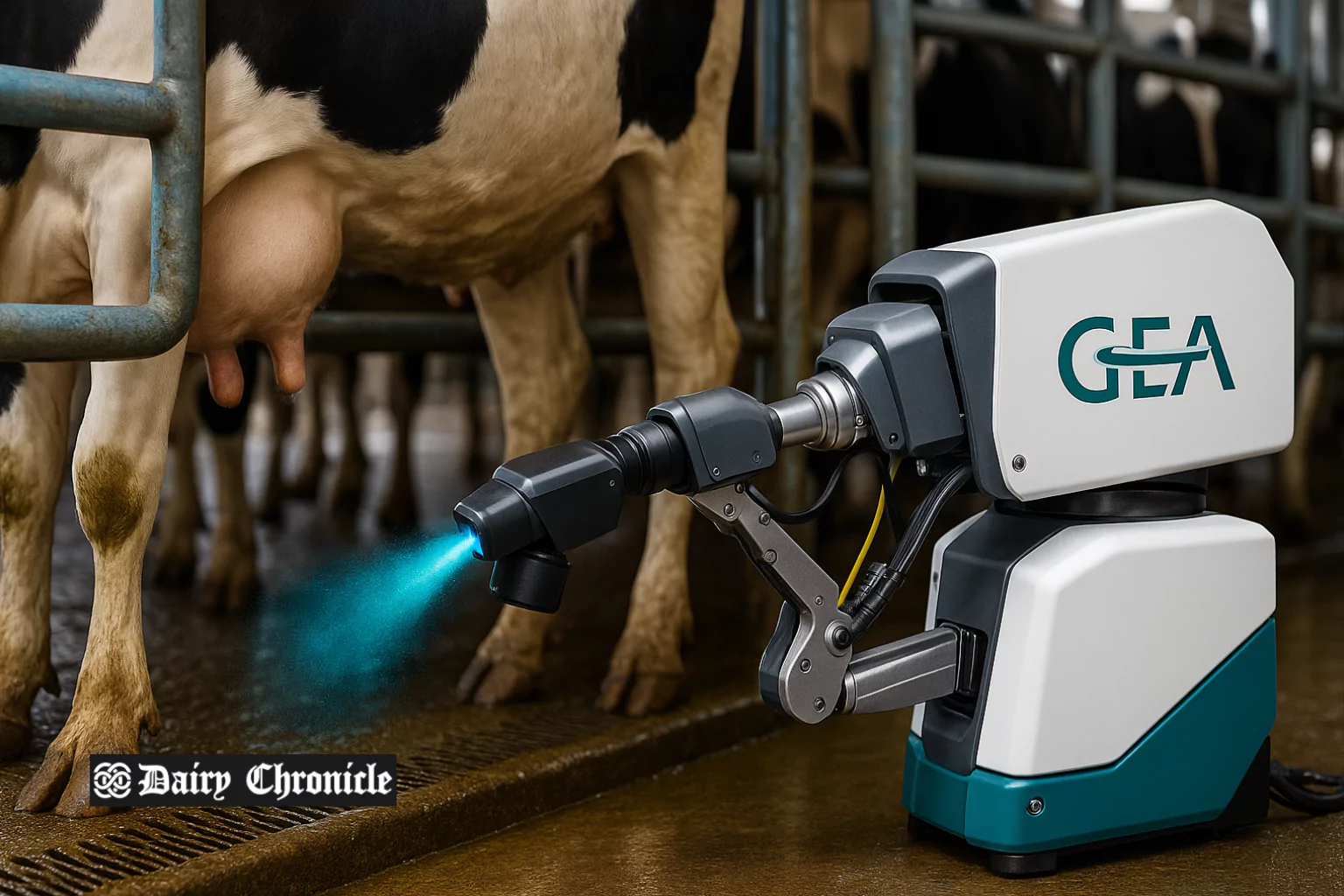
The GEA iSprayvision uses artificial intelligence to identify teats accurately and spray disinfectant with precision, reducing the risk of mastitis—a common and costly infection in dairy cows. It adapts to cow movement and ensures coverage without excess chemical use, making it ideal for organic setups.
The technology’s success reflects a broader trend of agritech adoption in organic and conventional dairy farms, especially in regions like Waikato, known for its high milk production. Automated solutions like iSprayvision are also key to improving sustainability, health outcomes, and time management for farmers.
As Vosper noted, “This is not just about automation; it’s about making dairy more humane, efficient, and future-ready.”
With increasing demands on animal welfare standards and sustainable production, the use of AI in dairy farming is no longer optional—it is quickly becoming a standard across modern agricultural systems.


