





India’s protein surge is re-shaping the fast-food and dairy sectors, motivating innovation, new product launches, and market expansion, at the same time, supplying the protein needs of the masses.
India’s Protein Boom Drives Innovation
India is witnessing a revolution in the consumption of proteins, which is drastically changing the nutrition market, the awareness that has spread countrywide. 73% of the population of 1.4 billion, is protein-deficient, especially in rural areas, so protein-enriched products which used to be only for the rich and the health-conscious people are becoming everyday food.
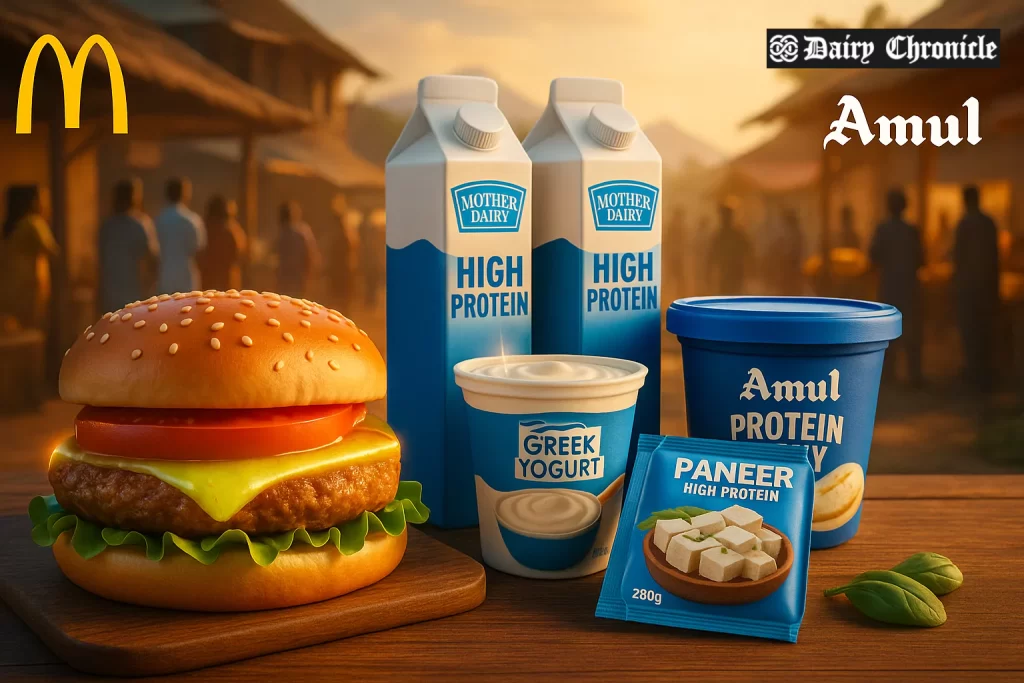
McDonald’s India topped the balloon of protein revolution by introducing a global-first vegetarian protein slice for burgers, created together with government food labs. The event had the audience buying in at lightning speed; 32,000 pieces were sold in 24 hours of the launch spread over 400+ points of sale, which is a clear testament of the urban protein demand.
Fast-Food Chains Fuel Protein Demand
Fast-food chains and startups are adopting the strategy of rising protein awareness in India weighed heavily in their favor. The implementation of smart product ideas, which range from protein enriched burgers to fortified snacks, identifying nutrition as the cornerstone of daily eating habits, is a decisive factor in the success of these brands.
What is clever about this fashion is that it allows well-made, protein-rich foods to penetrate the whole consumer base, not only the urbanites who are aware of their health. One such instance of protein becoming the new menu differentiator is McDonald’s which is not only creating brand loyalty but also appealing to the health conscious.
Also Read: McDonald’s Vegetarian Protein Slice India
Dairy Sector Responds with Protein Innovation
The dairy revolution in India is no less a protein boom either. The high protein dairy category went up 9.4% in 2024 to USD 1.5 billion, and it is expected to grow 12% in 2025.
Mother Dairy, while celebrating its 50th anniversary, grew revenue by 16%, and crossed the turnover mark of nearly ₹17,500 crore, its goal for FY26 is ₹20,000 crore. The brand growth was catalyzed largely by a vibrant portfolio of protein-rich solutions. Products like Pro Milk which promotes 30% more protein intake along with the anticipated Greek yogurt and high-protein paneer products are testament to the union’s dedication to cater the demand campus.
In the same way, Amul has turned to the whey and other waste streams to create innovations in the protein-enriched dairy products category that has products going from ice cream to buttermilk showing the company’s smart utilization of resources for both market reach and nutritional impact.
Also Read: This Startup Makes Real Milk Proteins Without a Farm—Here’s How
Market Perspective and Growth Forecast
In monetary terms, India’s dairy protein market was worth 627 million USD in 2024 and is anticipated to get to 1.13 billion USD by 2033 growing with a CAGR of 6.3%. The milk protein market, which stands at 241 million USD presently, is expected to reach 397 million USD by 2033.
This trend is a green indication of dairy protein to be the future of the sector which will ultimately be fueled by the increasing awareness of the importance of proteins for health, especially in the rural population that has a history of being less exposed to health programs.
Product Innovation Across Categories
Consumers living in cities are more and more asking for a wider choice of protein-rich products. The milk and fast-food brands are taking the trial with:
- Protein-fortified flatbreads, snacks, and bakery items
- High-protein beverages and shakes
- Protein-enriched ice cream and yogurts
- Enhanced milk and paneer variants
This innovation not only increases the customer base and profitability, but also facilitates the affordable availability of protein, which is a must-have item on India’s health agenda.
Strategic Implications for Dairy and Food Ecosystem
The Indian protein theme is a clear signal that the country is going to move to a dietary protein model rather than just supplying the necessary protein through supplements. This change will lead to the changes of supply chains, marketing strategies, and R&D investments. Dairy farms can earn money by selling the whey as a byproduct and can also create value-added, premium offerings for the increase of the profitability of both the farm and the farmer.
Fast-food chains get the opportunity to promote health messaging in their everyday menus, thereby getting closer to the consumer engagement and nutritional goals that they seek. The symbiosis of the factors of scale, invention, and affordability will be the determining factor of the sustainability of the protein-driven metamorphosis.
FAQ’s
Q1. Why is protein important in India’s diet?
Almost 73% of India’s population is protein-deficient, the condition is more severe in the rural areas, that is why protein-rich foods are a must for health and development.
Q2. How are fast-food chains responding to India’s protein trend?
Fast-food chains like McDonald’s India are introducing new dishes rich in protein, including vegetarian protein burger slices, to satisfy the growing consumer demand.
Q3. What is driving growth in India’s dairy protein market?
Urban demand is going up, product innovation by Mother Dairy and Amul is attracting consumers and the strategic use of whey and high-protein ingredients is creating new avenues in the market.
READ MORE ON


