
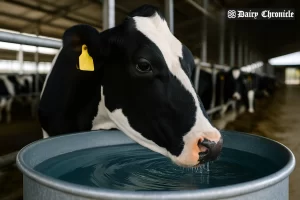






In the US, the over-supplementation of trace minerals in dairy cows is a source of risk for their health, farm economics, and the environment. A new model allows farms to better mineral supplement their cows.
Mineral Supplementation Model Supports Dairy Farms in the U.S.
A vital change in dairy nutrition is being experienced by the United States with the mineral supplementation that has been adjusted to avoid over-supplementation and to provide better welfare for animals as well as environmental safety. The latest research reveals that the excess of trace elements in the diets of dairy cows is the reason for various issues faced with the health of animals, their fertility, elevated feeding costs, and environmental risks.
Trouw Nutrition, a company that is among the top in the world in the field of livestock, has come up with a precision nutrition model whereby the user can make a correct balancing of the mineral requirements of a dairy cow in a sustainable way. By examining 5000 farm diets or so, the model points out the minimum supplementation level, thereby preventing the provision of essential nutrients to the cows in a way that won’t exceed tolerance limits.
The Problem of Over-Supplementation
Investigations in North America and Europe have discovered that essential minerals are provided in excess in the majority of diets. The dairy diets in the East of Canada and in California had copper levels that were on average 70% -80% higher than the recommended 10 ppm for lactating cows giving 32 kg of milk per day. The research on liver in the U.S. found out that 44% of samples with copper levels were above the safety line, and some were even over 850 ppm DM. These results were complemented with studies from the Netherlands and the UK that tracked the distribution of copper and other metals in cows livers and concluded that the cows were overloaded with copper and other metals regardless of the exact study location.
Over-supplementation, as a threat to animal health, leads to mineral excretion in the form of manure and urine and thus, their environmental pollution is increased. There are more than one reason for the reproduction problems in animals, among which there is the excessive presence of trace metals.
Trouw Nutrition’s Responsible Mineral Supplementation Model
The new model estimates how much of the trace minerals in forages and byproducts are part of the basal diet. Total mineral intake is calculated in relation to the Maximum Tolerance Level (MTL), whereby the producer can give copper, zinc, and manganese to the animals in the safest way and at the same time, prevent toxicity.
Dairy producers face stricter demands from regulators and consumers alike for sustainability and animal welfare. The application of precise mineral supplementation regimens that not only coincides with these trends but also is best feeding efficiency and has the least environmental impact solutions is what producers are looking for
Global Category Director for Trace Minerals at Trouw Nutrition, Gavin Boerboom
The model also supports the usage of mineral forms with high bioavailability, hence, cows absorb nutrients efficiently, and the unutilized is not released into the environment and thus animal health is also a step further strengthened as the farmer is reaping the economic benefits of the improved farm performance.
Economic and Environmental Benefits
Agricultural businesses would benefit substantially from the implementation of this mineral supplementation precision model. Less over-supplementation, for example, not only would save on the cost of feed but also would help lower trace mineral emissions (those discharged into the soil and water). Besides, as the environmental regulations become more stringent, dairy farms may be cleaner and less susceptible to regulatory risks if they implement scientifically supported supplementing schedules.
Through the mineral supplementation model, farms could apportion their resources in a sounder manner thus resulting in better breeding efficiency and weaning milk productivity of quality. Farmers will not only be able to maintain their market positions but also to gain an advantage as the global trend of sustainability and moral considerations in the animal dairy sector is becoming more and more important by the day.
Industry Implications and Future Trends
In view of major sustainability and animal welfare concerns, the U.S. dairy industry is likely to adopt the mineral supplementation programs that have shown their effectiveness via scientific evidence. The rules established by the USDA and FDA, among others, are seeking such solutions that will both reduce environmental runoff and ensure optimal nutrition for farm animals.
The model carries all the necessary relief for the feed business, nutritionists, and consultants who are further able to make recommendations based on the data about diets on a particular farm. By this means, the food industry takes a big step towards balancing corporate profitability, cows health, and environmental resources.
Conclusion
Firstly, optimized mineral supplementation is necessary for modern dairy operations. By using the milk production system like Trouw Nutrition’s, American dairy farms gain the power to increase productivity, boost cow health and welfare, reduce environmental impact and save operational costs. Precision nutrition is just one of the many innovations that await us in the future of sustainable and profitable dairy farming.
FAQ’s
Why do dairy animals need minerals?
Dairy animals need minerals to maintain healthy growth, strong bones, efficient reproduction, and steady milk production. Proper mineral intake also boosts immunity and overall productivity
What happens if dairy animals get too many minerals?
Excess minerals in dairy animals can cause toxicity, fertility problems, higher feed costs, and environmental pollution from mineral-rich manure and urine.
How much copper is safe in a dairy animal’s diet?
Lactating dairy animals need about 10 ppm copper in their diet. Levels higher than this can overload the liver and negatively affect health.
What is precision mineral supplementation of dairy animals?
Precision mineral supplementation for dairy animals is a system that measures total mineral intake from feed and compares it to safe tolerance levels, ensuring animals receive the right amount without over-supplementation.
Which minerals are most important for dairy animals?
The most important minerals for dairy animals are calcium, phosphorus, copper, zinc, and manganese. Together, they support milk yield, reproduction, bone strength, and overall health.
READ MORE ON


