





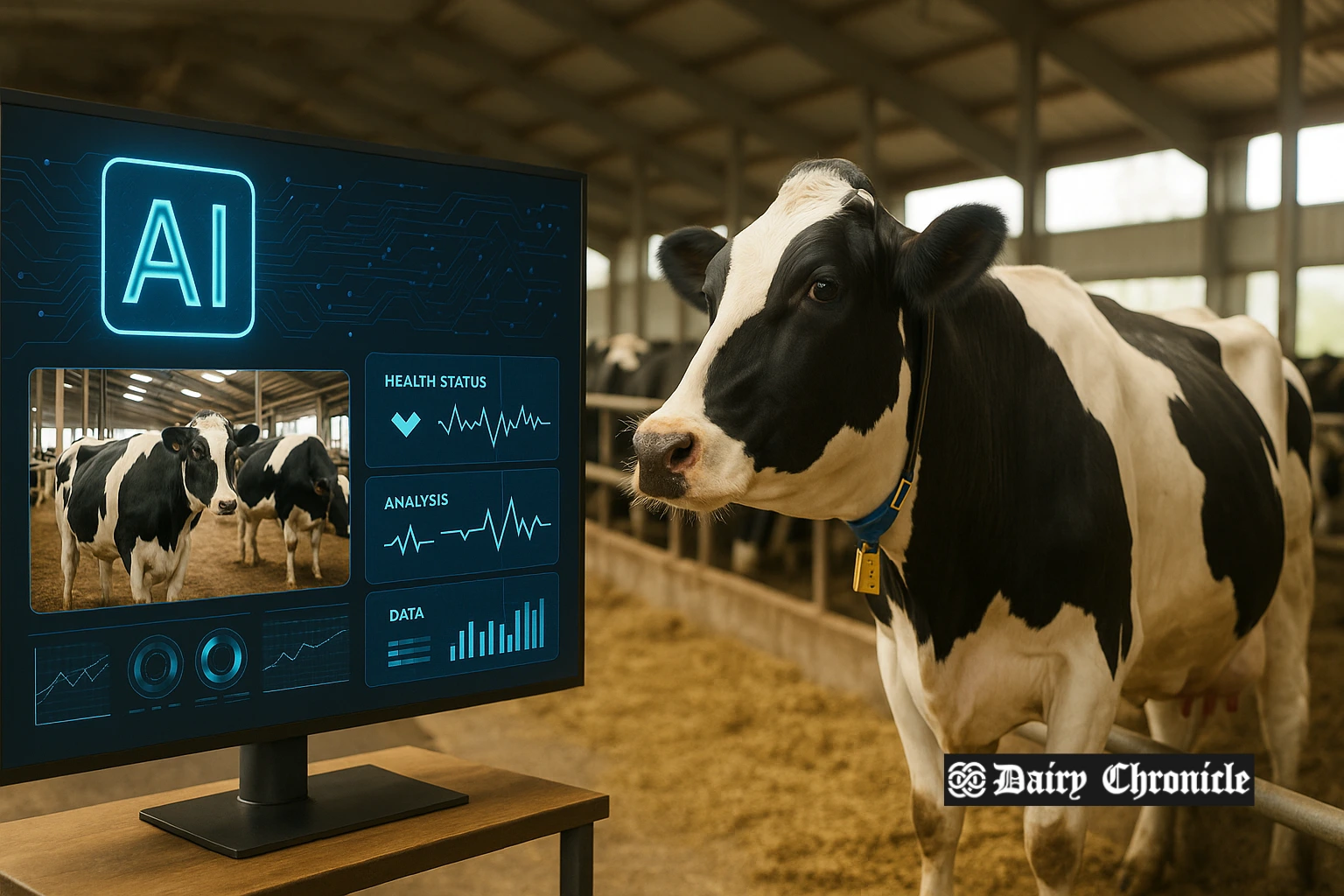
In the United States, researchers at Texas A&M AgriLife in Texas are advancing artificial intelligence-powered technologies to support the country’s dairy producers. Led by Dr. Sushil Paudyal of the Texas A&M College of Agriculture and Life Sciences, the initiative focuses on using AI, sensors, and robotics to improve herd health, detect diseases earlier, and optimize dairy farm productivity. Paudyal’s lab is currently developing noninvasive disease-detection systems, precision efficiency models, and a generative AI assistant named “DairyBot,” which is expected to launch its prototype within six months.
In the United States, Texas, Texas A&M AgriLife—a part of the Texas A&M University System focused on agricultural science and innovation—is taking the lead in precision dairy care. Researchers at its Department of Animal Science in the Texas A&M College of Agriculture and Life Sciences are advancing artificial intelligence (AI), sensors, and robotic tools to modernize dairy operations and support cattle health.
On June 22, Dr. Sushil Paudyal, assistant professor of dairy science, presented groundbreaking AI-based research at the American Dairy Science Association conference in Louisville, Kentucky. His work focuses on developing adaptable, real-time technologies for disease detection and farm efficiency.
“Sensor-based systems, AI and real-time analytics are transforming how dairies make everyday decisions,” Paudyal said. “But to be effective, these technologies must be adaptable, updatable and tailored to individual farm needs.”
His lab has already developed models to detect heat stress, lameness, mastitis, and digital dermatitis using camera images and behavioral data, helping farmers act earlier and more accurately.
At the U.S. Precision Livestock Farming Conference, Paudyal’s team highlighted three major studies:
- Heat Stress in Robotic Milking Systems – Demonstrated how managing cow cooling and feeding significantly improves milk yield and milking efficiency.
- AI-Based Detection of Heat Stress and Mastitis – Uses video analytics for real-time health monitoring in large herds.
- Computer Vision for Digital Dermatitis – Tracks early hoof disease symptoms noninvasively with image-based detection.
To reduce dependency on costly sensors or invasive procedures, Paudyal’s team is working on low-cost camera systems and a diagnostic solution that doesn’t require blood or milk samples. “We are developing sensors that monitor behavior and physiology to detect sick cows without needing invasive sampling,” he said.
One of the most ambitious developments in progress is “DairyBot”, a generative AI-powered virtual assistant that will allow dairy producers to ask questions about feed, health, or management and receive farm-specific advice using their own herd data. A prototype is expected within six months.
“DairyBot won’t replace the vet or nutritionist,” Paudyal added. “But it will empower them with real-time data interpretation and decision support.”
Although cutting-edge, Paudyal emphasizes flexibility and affordability, particularly for small or mid-sized farms. By reducing costs with scalable camera-based systems and virtual tools, the goal is to bridge the digital divide and promote wider adoption of tech across the dairy sector.
“As a land-grant university with a mission to support Texas dairy farmers, it is essential to develop research projects that provide practical, immediately applicable solutions,” he said.
With real-time analytics and cost-effective tools on the rise, Texas A&M AgriLife is positioning itself as a key player in shaping the future of data-driven dairy farming in the United States.


