





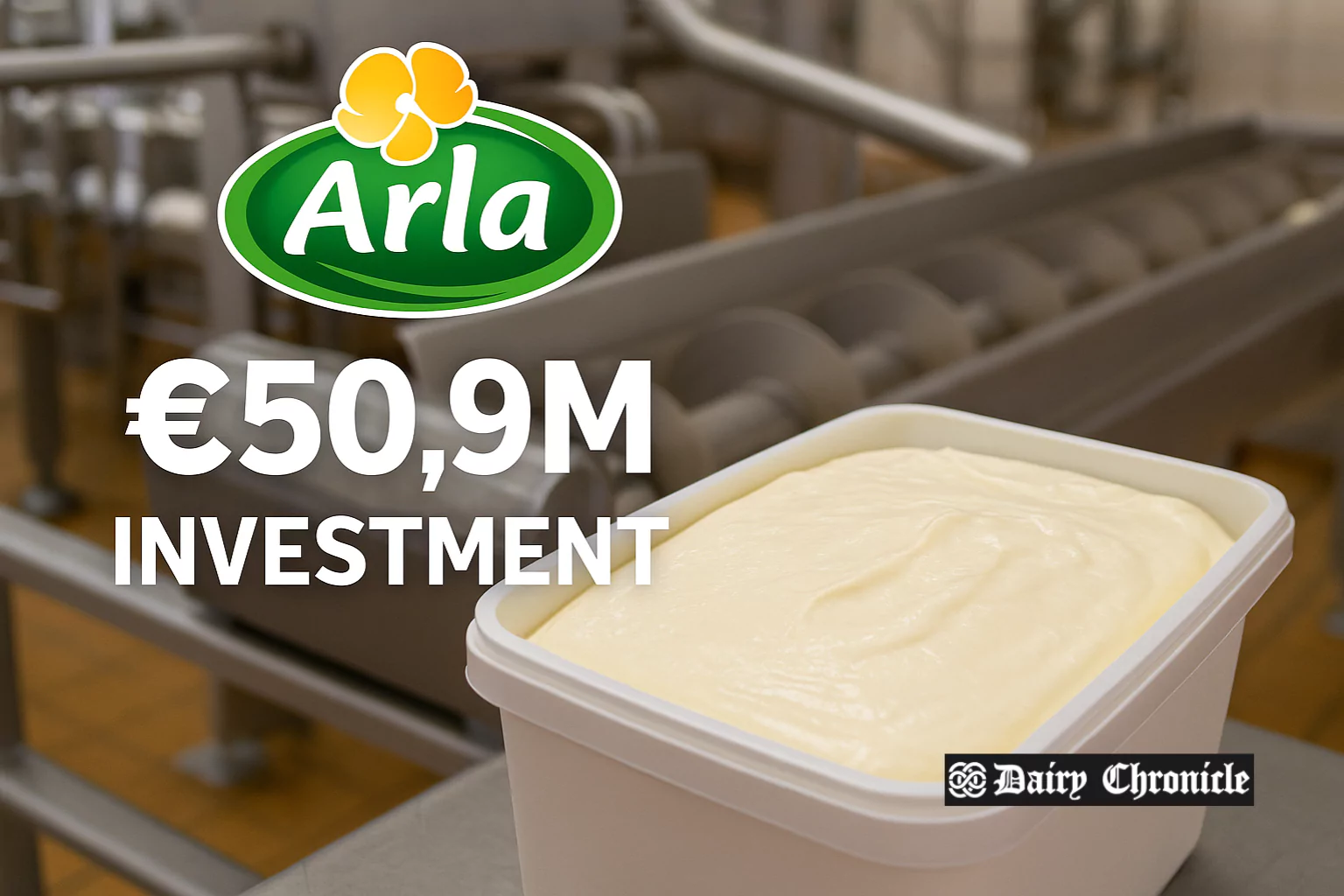
Arla Foods has announced a €50.9 million investment in its Bahrain cheese factory to increase production capacity by 30%, create 20 jobs, and integrate renewable energy solutions. The move reflects Arla’s focus on financial growth, market demand, and sustainability in the MENA region.
Arla Foods has confirmed a strategic investment of €50.9 million into its Bahrain-based cheese factory, a move aimed at strengthening its production and market position in the Middle East and North Africa (MENA) region. The project will expand production capacity by approximately 30% and enhance warehouse capabilities.
The expansion, scheduled to begin construction by late 2025, will create around 20 new jobs in Bahrain. The factory, which produces cheese under the popular Puck brand, plays a crucial role in meeting seasonal demand spikes, particularly during Ramadan and the back-to-school period.
The investment also aligns with Arla’s sustainability goals. Solar panels will be installed on the factory roof, while upgrades to cooling systems will reduce energy consumption and carbon emissions. This step underscores the company’s strategy of balancing profitability with environmental responsibility.
Financial and Strategic Insights
From a financial perspective, the €50.9 million allocation signals Arla Foods’ confidence in the growth potential of the MENA dairy sector. Rising urban populations, shifting consumer preferences toward packaged dairy products, and increasing purchasing power across the region make Bahrain a strategic hub for expansion.
Experts note that capacity enhancement by 30% could generate a measurable uplift in annual revenue streams, especially during peak demand seasons. By investing in renewable energy infrastructure, Arla also mitigates operational risks tied to energy costs, thereby strengthening its long-term profitability outlook.
Since acquiring the Bahrain site in 2019, Arla Foods has consistently focused on enhancing consumer trust, local employment opportunities, and sustainable food practices. This investment further demonstrates its financial resilience and ability to reinvest profits into long-term regional growth.


