






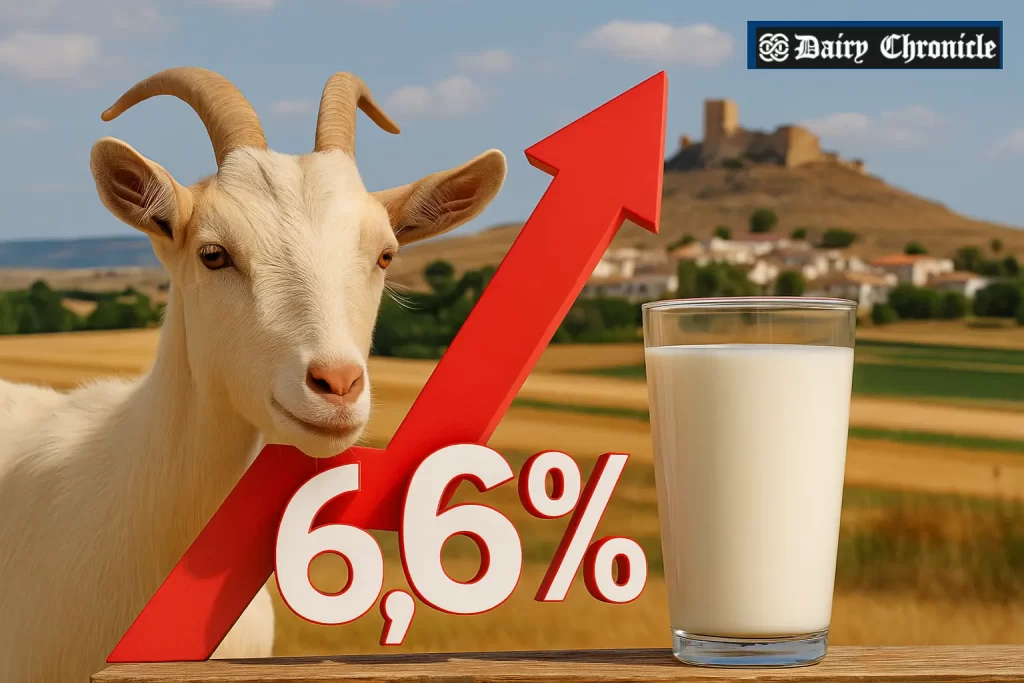
Due to lower production and less farmers, Spain has gone up the goat milk price by 6.6%. Supply is getting tighter against steady demand.
Goat milk prices in Spain have risen by 6.6%.
The dairy industry in Spain is experiencing a significant change in the price of goat milk as a result of the supply side being squeezed by falling production and fewer producers. The average price per hectogram has increased from 10.67 euros to 11.37 euros in the period from June 2024 to June 2025, which is a 6.6% increase, according to data from Spanish agricultural authorities.
Shortages in supply have been the main factor causing the rise of goat milk prices.
The main reason for the price increase of goat milk is the reduction of production by 6.1% during the first half of 2025 compared with the same period in 2024. The reduction is explained by both the natural fluctuation in production and the decline of the number of farms in Spain which went from 4031 to 3737, a decrease of 7.3%.
Experts point out that the firm demand, together with the limited supply had the effect of pushing the prices up straight away. “The market is reacting to the limited supply at a time when consumer demand remains unchanged, thus the price of goat milk goes up,” said an analyst at dairynz.com
The effect of regional differences on market dynamics
This or that region of Spain, for instance, Castilla-La Mancha and Andalucía, are way ahead as to the amount of goat milk output. The supply-demand imbalance has been amplified by the production challenges that include drought, feed cost, and farm consolidation, and this has contributed to the further strengthening of the price rise.
Producers are experiencing the same as that of the consumers that they will be paying more, while the production of goat milk is going down, “The current scenario is a major factor that leads to the 6.6% goat milk price increase this year.”
Consultant Of The Dairy Market, Javier Ruiz
Also Read: A Crisis in the Making: The Fall of Spain’s Sheep and Goat Milk Industry
Economic and industrial implications
The surge in the price of goat milk impacts every segment of the milk supply chain. While goat milk products can be priced differently in retail, a look at the cheese and yogurt industries shows that costs are a rising concern. While smaller farms might get some financial relief, the trend in the decreasing number of producers is telling of deeper structural problems in Spain's goat dairy sector.
Moreover, international purchasers are also aware of the situation. A significant amount of goat milk products are sold abroad by Spain, and increasing prices may have an impact on the global competitiveness. Experts advise Spanish producers to implement efficiency programs and dairy-related innovations that will allow production to go on without the price of goat milk rising.
Market outlook
According to Licensed Informants, the price of goat milk is expected to rise due to difficulties in production and steady demand. To flip the situation to their favor, farmers may be able to use these methods to recover their herds’ health, achieve more efficient feeding, and practice sustainability. However, while they can have an impact on the general trend, they are not able to remove the supply limitations that have a short-term nature and cause the prices to remain high.
FAQ’s
Why is the goat milk price rising in Spain in 2025?
Goat milk prices are rising in Spain because supply has fallen while demand remains steady. Goat milk production dropped 6.1% in early 2025, causing a 6.6% price increase compared to the previous year.
How much has the goat milk price increased in Spain?
The average goat milk price rose from 10.67 euros to 11.37 euros per hectogram between June 2024 and June 2025, marking a 6.6% increase, according to Spanish agricultural data.
Why is goat milk production falling in Spain in 2025?
Goat milk production is declining in Spain due to drought, higher feed costs, and farm closures. The number of goat farms dropped from 4,031 to 3,737 in a year, a 7.3% decrease.
Which regions of Spain produce the most goat milk?
Regions like Castilla-La Mancha and Andalucía lead goat milk production in Spain. However, these areas also face challenges like climate stress and farm consolidation, which affect supply.
How does the rise in goat milk price affect Spanish consumers?
Spanish consumers are facing higher costs for goat milk, cheese, and yogurt, as processors pass on increased raw milk prices to the retail market.
Could Spain’s goat milk exports be impacted by higher prices?
Yes. Spain exports a large share of its goat milk products, and rising prices may reduce competitiveness in international markets, especially for cheese and yogurt.
READ MORE ON


