





Saudi Arabia’s capital Riyadh hosts the world’s largest camel festival, celebrating the animal’s religious, historical, and economic significance. The Saudi Camel Club, established in 2016, organizes global events supporting this traditional sector. With over 50,000 camels and SAR 250 million in prizes, the King Abdulaziz Camel Festival reinforces camels as a national symbol and an economic asset.
Camels hold a deep-rooted place in the religious and cultural fabric of Saudi Arabia, with the government of Riyadh state playing a central role in preserving and promoting this heritage. Camels are revered in Islamic tradition and have historically contributed to the Kingdom’s unity and identity, notably accompanying the founding monarch, King Abdulaziz Al Saud.
In a formal effort to support and professionalize camel-related activities, the Saudi Camel Club was launched in 2016. It became the world’s first official organization dedicated to camels, tasked with organizing international events, preserving camel breeds, and promoting camel-based tourism and trade.
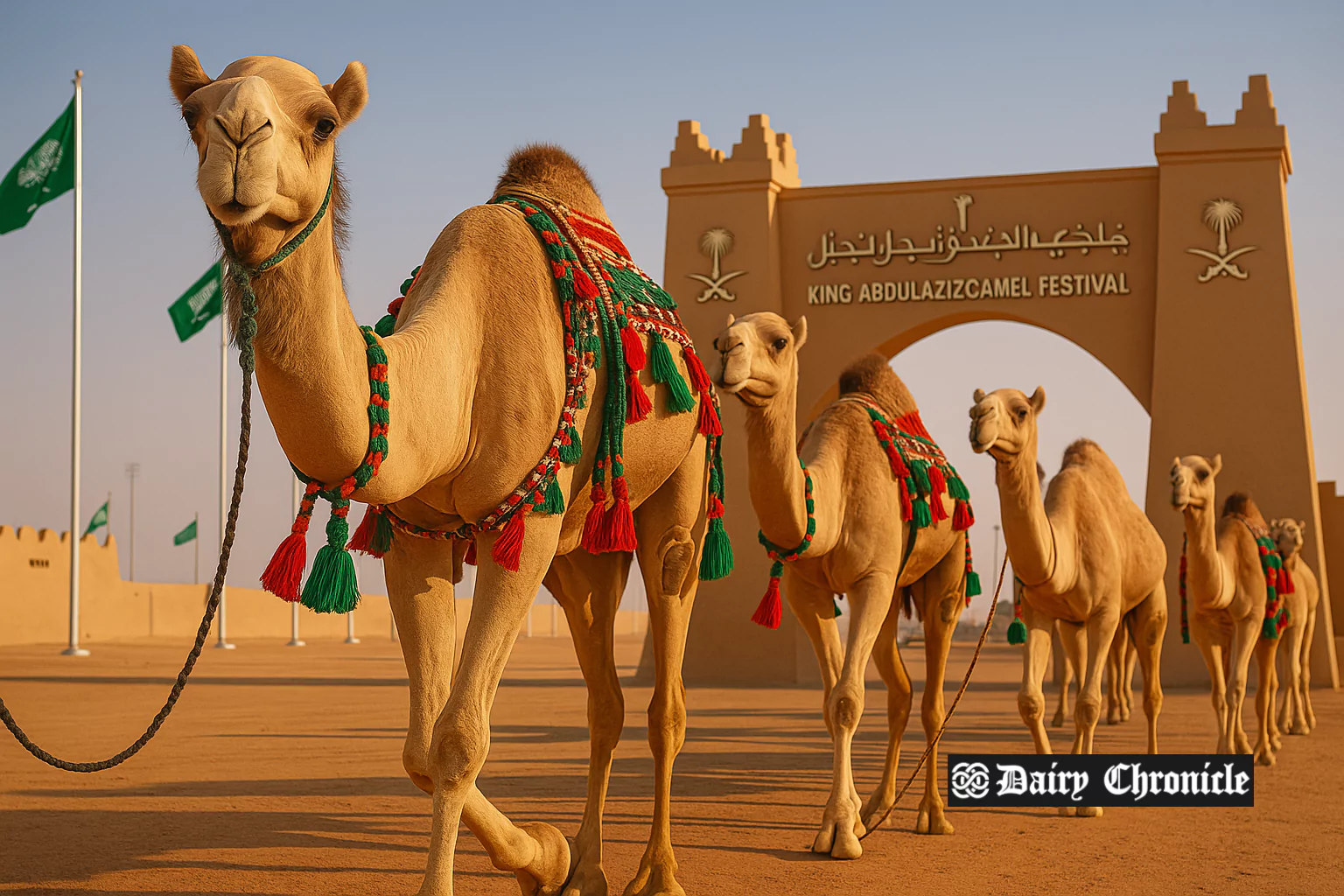
A highlight of this commitment is the King Abdulaziz Camel Festival, recognized as the largest gathering of camels globally. Held annually from early December for up to 40 days, the festival takes place 120 kilometers northeast of Riyadh, on a vast 30 million square meter site.
The 2024 edition of the festival featured more than 50,000 camels and 900 participants, offering total prizes nearing SAR 250 million (approx. USD 66.6 million). The closing ceremony is graced by either the King or the Crown Prince, symbolizing the state’s highest level of support.
Multiple Saudi government bodies, including the Police, Civil Defense, Health Services, and Riyadh Municipality, ensure the smooth and secure execution of the event. Alongside beauty contests judged by age, color, and breed, the festival also hosts traditional markets, cultural performances like the Saudi Ardah (sword dance), and global visitor engagement.
Saudi Arabia classifies camels into six major color types, reflecting regional aesthetics and breeding diversity. This classification also plays a key role in judging competitions at festivals.
Camels are increasingly recognized as a source of economic growth, with some specimens valued at millions of riyals. Their role now bridges cultural heritage with economic potential, aligned with Vision 2030, Saudi Arabia’s blueprint for sustainable development.
In support of the global camel sector, an independent social media platform, World of Camels, was established three years ago. Operating in five languages — Arabic, English, French, Hindi, and Chinese — it features weekly expert discussions and provides global insights into camel care, farming, and product development.
Saudi Arabia continues to cement its leadership in the global camel industry, combining tradition, technology, and tourism to ensure that this heritage lives on across generations.


