





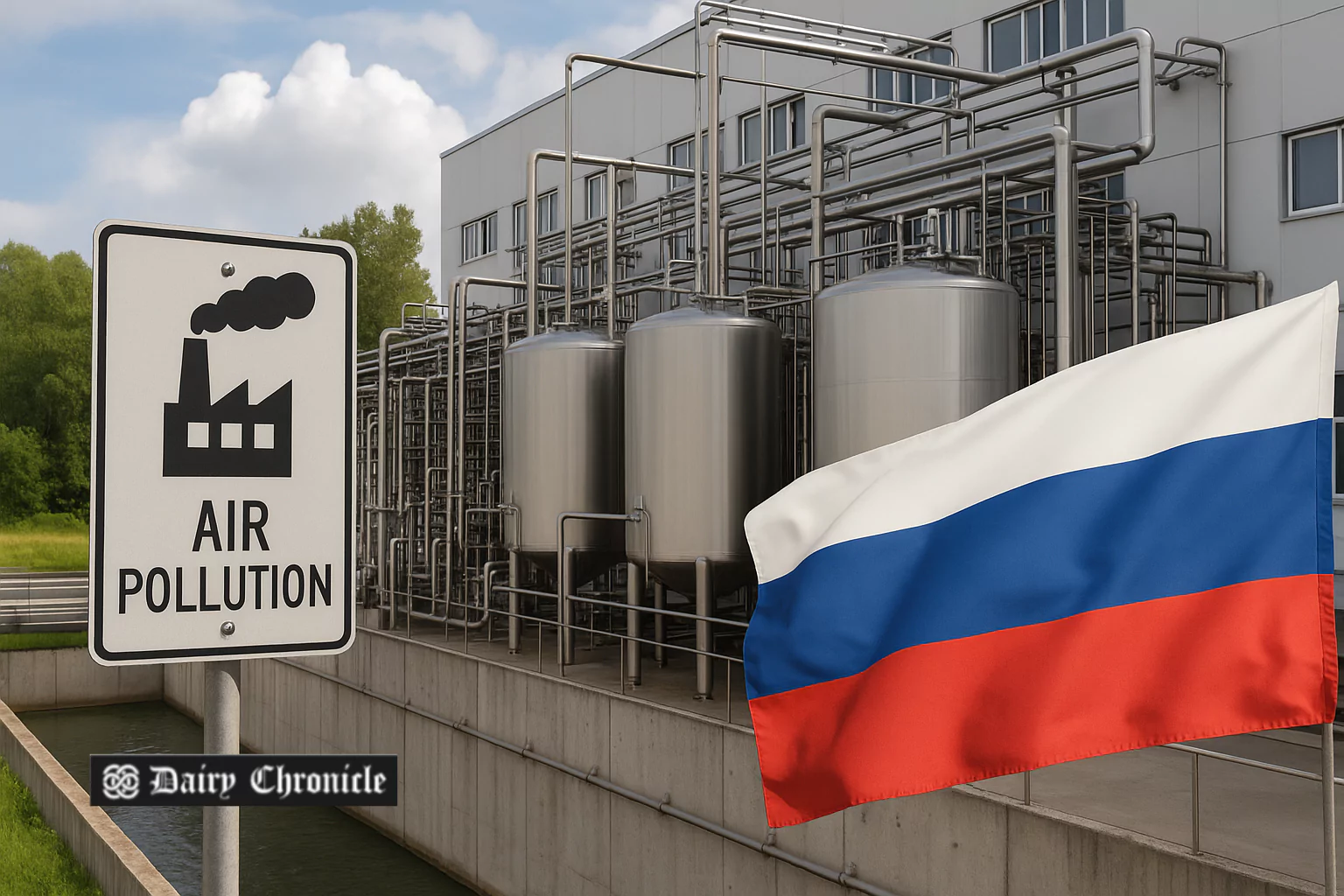
Russia has announced stricter environmental standards for the dairy sector, effective from September 1, 2025. These new benchmarks, introduced by the Ministry of Natural Resources under Order No. 244 dated April 30, 2025, aim to tighten air and water pollutant limits in milk processing. The move reflects growing pressure on the agri-food sector to address its environmental impact.
In a major regulatory shift, the Russian Ministry of Natural Resources has introduced new emission standards for the country’s dairy industry, which will come into effect on September 1, 2025. These standards, outlined in Order No. 244 dated April 30, 2025, were officially registered by the Ministry of Justice on May 26, 2025.
The Ministry of Natural Resources of the Russian Federation is responsible for overseeing the country’s natural resource usage and environmental protection. With these revised benchmarks, the ministry is aiming to align dairy production practices with more sustainable and eco-conscious methods.
The updated regulations focus on the Best Available Techniques (BAT) for dairy processing and replace the previously followed standards introduced in 2019. One of the major changes is the shift from total limits on particulate matter to specific emission thresholds for individual pollutants.
Air Emissions Standards per 1,000 Tonnes of Dairy Processed:
- Nitrogen Dioxide (NO₂): 0.4 tonnes
- Nitric Oxide (NO): 0.17 tonnes
- Sulfur Dioxide (SO₂): 0.012 mg
Water Pollution Limits:
- Phosphates: Now 9.61 mg/dm³ (down from 12)
- Sulfates: Cut to 220 mg/dm³ from 1,000
- BOD₅: Lowered to 300 mg/dm³ from 361
- Suspended Solids: Reduced to 290 mg/dm³ from 300
- Anionic Surfactants (A-SPAS): Introduced at 2.4 mg/dm³
Meanwhile, the levels for ammonium ions (0.12 mg/dm³) and COD (500 mg/dm³) remain unchanged. Notably, chloride emissions will no longer be regulated separately under the revised framework.
This development comes amid increasing scrutiny of the agri-food sector’s contribution to greenhouse gas emissions. While the Ministry of Economic Development had previously suggested mandatory reporting of CO₂, methane, ozone, and nitrogen oxide emissions, this proposal met resistance from industry leaders who viewed it as overlapping with existing mandates.
The new framework positions Russia’s dairy industry for a more environmentally responsible future, although compliance could pose operational challenges for smaller processors.


