





New Zealand’s dairy sector is undergoing a strategic transformation, as highlighted in the USDA Wellington Office’s biannual report released on June 20, 2025. While fluid milk production is forecasted to reach 21.7 million tons in 2025, whole milk powder (WMP) exports continue to lose their dominant share as processors shift towards more value-added products like cheese, butter, and specialty dairy ingredients. Despite a slight increase in milk output, structural changes, sustainability initiatives, and a focus on high-margin products are reshaping New Zealand’s export profile.
New Zealand’s dairy industry, long recognized for its global dominance in milk powder exports, is entering a new phase. According to the USDA Wellington Office’s latest biannual report, fluid milk production is projected to reach 21.7 million tons in 2025, reflecting a modest rise from the previous year. The report credits the growth to improved per-cow productivity, efficient herd management, and favorable short-term economic factors, including high producer prices and lower interest rates.
Despite the increase in output, the dairy sector is seeing a notable shift in its export structure. Whole milk powder (WMP)—historically the primary export product—continues to decline in share. In Q1 2025, WMP represented just 40% of New Zealand’s total dairy export volume, compared to 45% in 2018. The United States Department of Agriculture (USDA) estimates fluid milk exports will hit 250,000 tons in 2025, slightly lower than USDA’s earlier projection but aligned with 2024’s total of 245,836 tons.
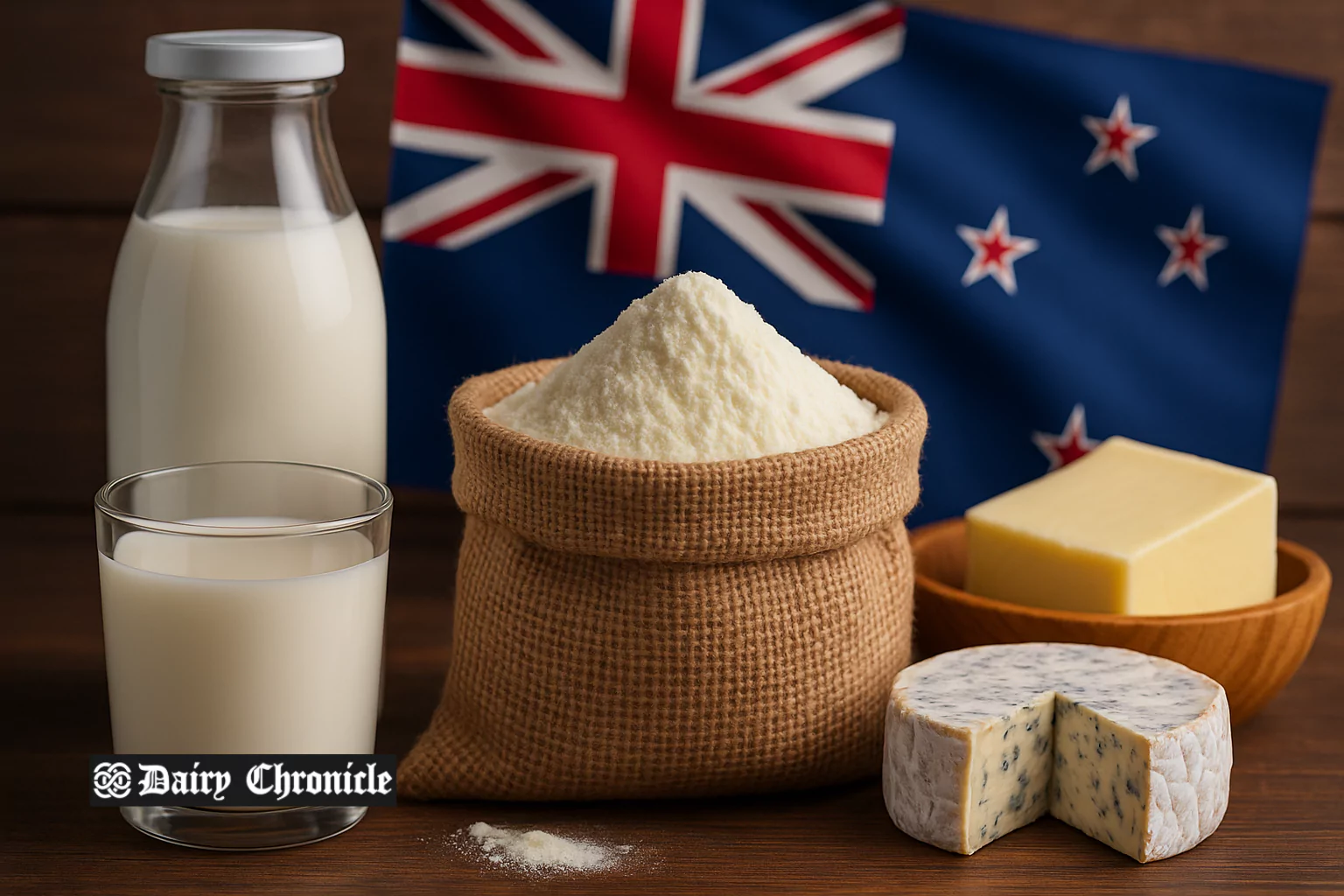
New Zealand’s dairy processors remain heavily export-focused, driven by the country’s small domestic market. But instead of relying solely on bulk milk powder, processors are now prioritizing value-added products like cheeses, butter, cream, and dairy fats. There’s also growing capacity for specialized products, including infant formulas, whey and milk protein concentrates (WPC, WPI, MPC), lactoferrin, and caseinates.
This change comes alongside major capital investments across the industry, aimed at modernizing production facilities and phasing out coal-based energy. Processors are increasingly adopting cleaner energy sources such as wood biomass, electricity, and natural gas to meet sustainability goals.
China remains the top export destination, accounting for nearly 75% of New Zealand’s fluid milk exports. However, evolving consumer demand and sustainability expectations are encouraging processors to diversify both their product offerings and target markets.
With the dairy landscape becoming more competitive and environmentally driven, New Zealand’s shift from bulk milk powder to high-value dairy ingredients marks a deliberate strategic transformation for long-term growth.


