






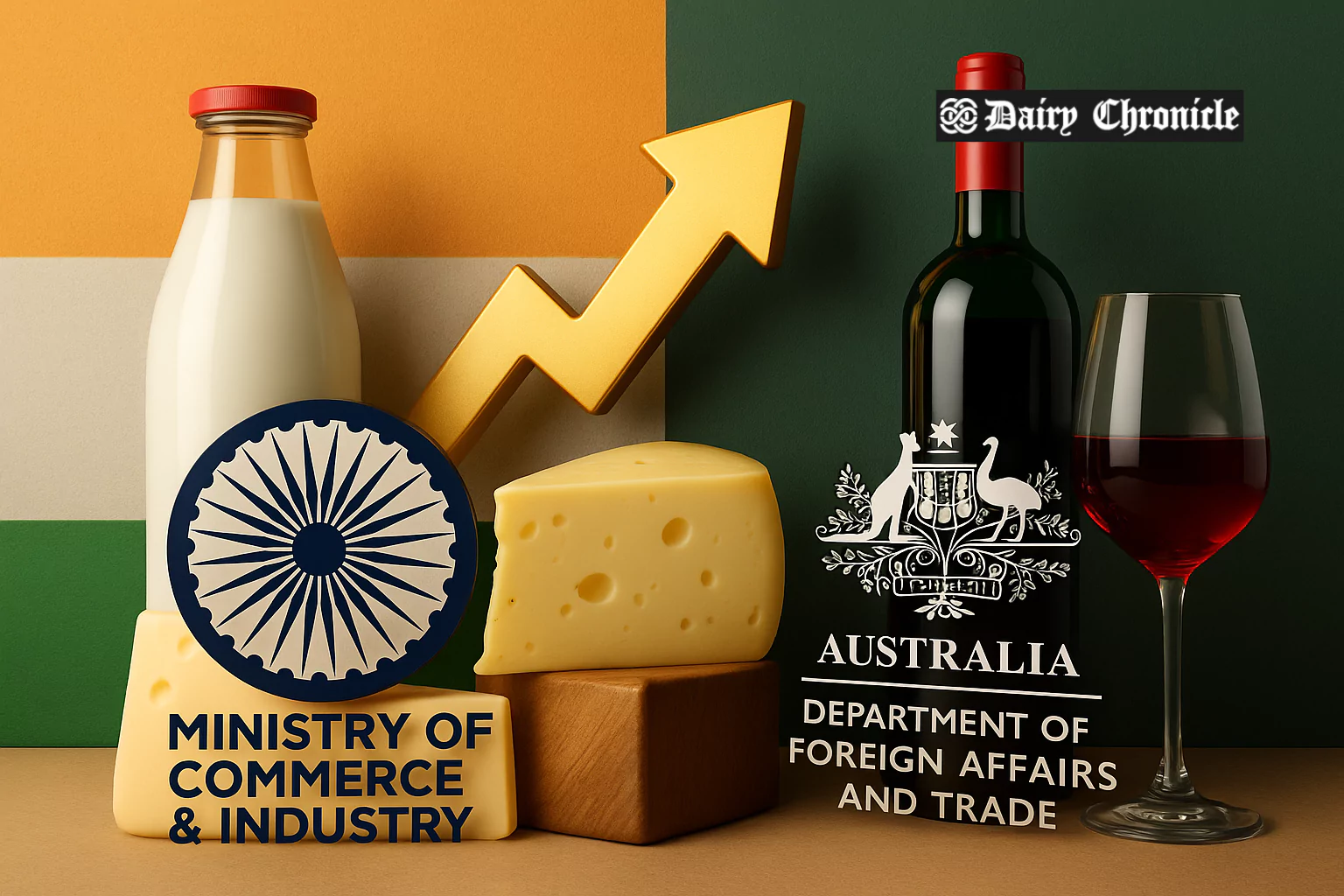
Trade negotiations between India and Australia for the Comprehensive Economic Cooperation Agreement (CECA) have stalled as tariff disagreements over wine and dairy products remain unresolved. While Australia seeks faster access for its premium wines and dairy goods, India, particularly states like Gujarat and Maharashtra, continues to defend its domestic industries. Both governments remain hopeful of concluding the agreement by the end of 2025.
Trade negotiations between India and Australia on the Comprehensive Economic Cooperation Agreement (CECA) have stalled over persistent disputes surrounding dairy and wine tariffs. The talks, initially launched to enhance bilateral trade, are facing resistance from India’s domestic agriculture sector, particularly in Gujarat and Maharashtra.
The CECA discussions, spearheaded by the Department of Commerce, Ministry of Commerce & Industry, Government of India and Australian Department of Foreign Affairs and Trade (DFAT), aimed to expand market access and economic cooperation across multiple sectors. However, the dairy and wine tariff debate has become a significant barrier.
Australia is lobbying for quicker reductions in tariffs for premium wines and broader access for dairy exports, such as cheese, high-protein whey, and lactose-based products. These currently face tariffs between 20% and 30% in India. Under the 2022 interim trade agreement, wine tariffs were already reduced—from 150% to 100% for bottles priced above USD 5, and to 75% for those over USD 15—with further phased reductions under discussion.
Australian trade bodies argue that further tariff cuts would benefit Indian consumers and support Australian exporters by enhancing affordability and expanding niche offerings. However, Indian stakeholders have taken a firm stand. Farmer organizations and industry bodies from Gujarat and Maharashtra, known for their strong dairy and growing wine sectors, have opposed any liberalization, fearing it could hurt local production and prices.
India has instead focused on negotiating tariff relaxations for industrial goods, improvements in service sector access, and easing visa processes for skilled professionals, without yielding ground on agriculture.
Despite the impasse, officials from both countries remain optimistic. Backed by the leadership of both Prime Minister Narendra Modi and Prime Minister Anthony Albanese, the deal could still be finalized by the end of 2025—provided mutual compromises are achieved on the most contentious issues.
The CECA is expected to unlock new bilateral trade opportunities, but the current deadlock over sensitive sectors like dairy and wine highlights the complex balancing act between global trade ambitions and domestic economic protection.


