





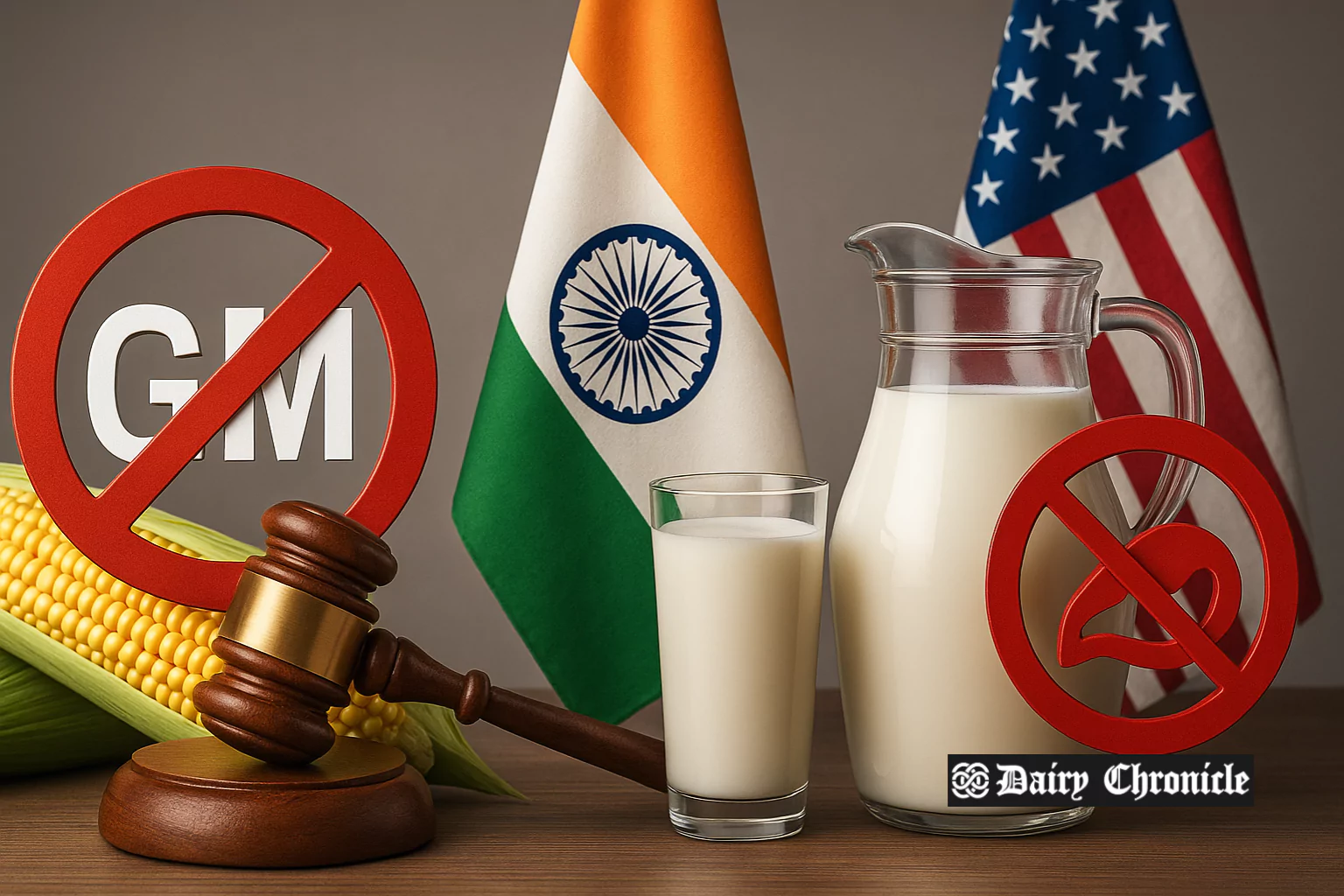
India has firmly excluded Genetically Modified (GM) food and U.S. dairy products from trade negotiations with the United States, prioritizing food sovereignty and rural livelihoods over external trade pressures. The decision underscores India’s cautious trade strategy, reflecting deep agricultural sensitivities, political resolve, and a broader protectionist approach in sectors tied to food security.
In a significant policy stance, India has made it clear that Genetically Modified (GM) food crops and U.S. dairy products will remain off the table in ongoing trade negotiations with the United States. This decision reflects India’s strategic emphasis on food sovereignty, rural employment, and self-reliance in agriculture.
The move is not merely political posturing but a calculated economic stance rooted in protecting India’s vast agro-based economy, which supports over 50% of the population. GM crop imports, such as corn and soy, pose a potential threat to India’s traditional farming structures, where smallholder farms dominate. Experts indicate that introducing GM food could distort local markets, reduce biodiversity, and weaken farmer autonomy by increasing dependence on foreign seed patents.
India’s regulatory framework continues to prohibit GM food cultivation and commercial sale, allowing only Bt cotton under a tightly controlled structure. Any deviation from this policy would require massive legislative and public consensus shifts—unlikely in a country where food security is deeply entwined with political stability.
Equally significant is India’s position on dairy imports. India operates the largest dairy industry in the world by volume, with more than 80 million rural households reliant on dairy for sustenance and income. U.S. dairy products, often derived from cattle fed with animal-based additives, not only conflict with Indian regulatory and religious standards but also threaten to undercut domestic prices due to scale-driven cost efficiencies.
Economists interpret India’s stance as part of a broader trade strategy prioritizing long-term economic resilience over short-term liberalization. While the U.S. continues to seek expanded access to India’s agricultural markets, the Indian government is sending a clear message: trade cannot come at the expense of food sovereignty or rural livelihoods.
Policy experts suggest this will remain a recurring theme in India’s trade negotiations, especially under global pressure to conform to open-market principles. The resistance to GM food and U.S. dairy reflects a wider trend in India’s policy approach—shielding sectors critical to public health, employment, and national interest, even when facing reciprocal tariff risks.
This position further aligns with India’s self-reliance initiative in agriculture, aimed at bolstering domestic production through technology, infrastructure, and rural support programs, while maintaining autonomy over what enters the nation’s food supply chain.


