


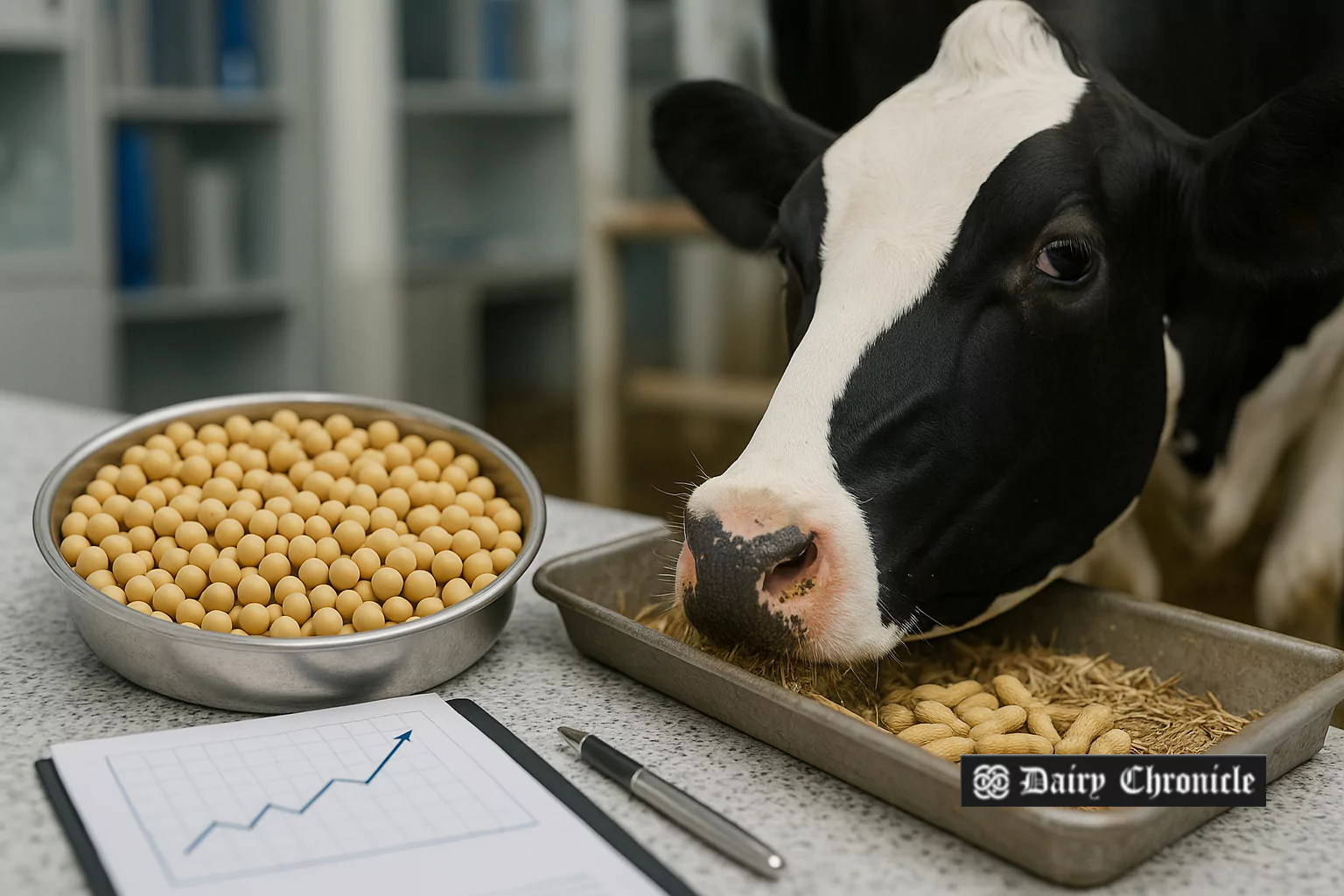
High oleic soybeans, originally bred for healthier human consumption, are now transforming dairy cow nutrition in the United States, especially in Pennsylvania, with benefits such as increased milk fat production and improved feed efficiency. This development is being actively explored by experts like Dr. Kevin Harvatine of Penn State University, with recent insights shared during Balchem Corporation’s Real Science Lecture Series.
High oleic soybeans, once a response to health concerns in human diets, are now finding renewed purpose in dairy barns across the United States. Developed in the early 2000s to replace trans fats and partially hydrogenated oils, these soybeans are now proving vital in enhancing dairy cow performance and feed efficiency.
This shift in usage is being championed by experts like Dr. Kevin Harvatine, Professor of Nutritional Physiology at Pennsylvania State University, who recently shared insights during the “Real Science Lecture Series” organized by Balchem Corporation, a company specializing in nutrition and health solutions for animal and human markets.
“These soybeans produce fats that are more stable and rumen-friendly, making them an excellent energy source for dairy cows without causing milk fat depression,” explained Dr. Harvatine. “We’ve been using them since 2017, but interest has surged over the past 18 months.”
High oleic soybeans contain higher levels of oleic acid and lower saturated fat content, making their oil not only suitable for high-temperature cooking but also more digestible for cows. Research cited by Harvatine shows an increase of up to 65 grams of milk fat per cow per day when the beans make up 5% of the diet.
Economic returns are also notable. Studies indicate an increase in income over feed costs by 15 to 20 cents per cow daily, even with a premium price on these soybeans.
Dr. Harvatine also emphasized the added protein value soybeans bring. “They significantly contribute to metabolizable protein and amino acid absorption, impacting milk protein yield,” he said.
From a crop management perspective, soybeans present an opportunity to grow high-quality, home-produced fats and proteins, integrating seamlessly into crop rotations. Their nitrogen-fixing properties further enhance their appeal in sustainable farming systems.
“High oleic soybeans offer a win-win — they’re an excellent source of fat and protein for dairy cows, and they fit well within our crop systems,” said Harvatine. “Farmers should consider them a comprehensive tool for balancing both energy and protein needs in rations.”
As feed prices rise and dairy efficiency becomes increasingly important, high oleic soybeans are emerging not just as a health food staple, but as a cornerstone of modern dairy cow nutrition.