


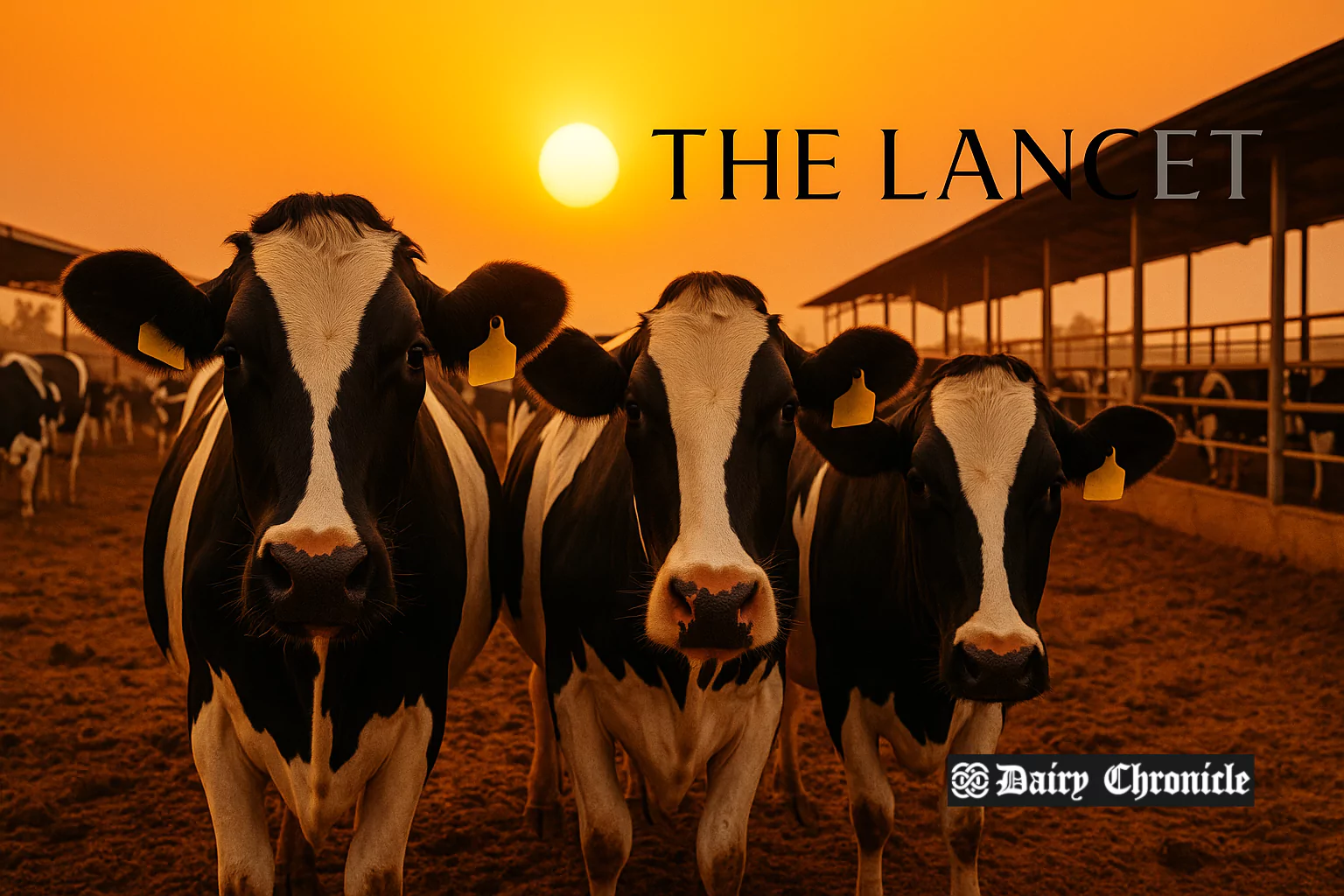
India’s dairy sector, valued at $150 billion, is under severe stress due to rising heat from climate change. A Lancet report warns that without urgent adaptation, milk production could drop by up to 25% by 2085, affecting 89 million smallholder farmers. The crisis is especially dire in Uttar Pradesh, India, where early economic losses are projected to reach $1.8 billion by 2030.
India’s dairy sector—valued at over $150 billion USD and representing nearly 25% of global milk production—is facing a severe crisis due to rising temperatures driven by climate change. A recent report published in The Lancet highlights that heat stress may reduce India’s milk output by up to 25% by 2085, with possible declines reaching 45% by the century’s end.
India is home to approximately 89 million smallholder dairy farmers, who are most vulnerable to climate disruptions. The report warns of major losses particularly in Uttar Pradesh, India’s largest milk-producing state, with projected milk production losses totaling ₹15,000 crore (approx. $1.8 billion USD) by 2030.
This environmental challenge not only threatens the livelihoods of rural farmers but also places strain on India’s food security and rural economy. The rising temperatures are also expected to increase operational costs, such as the need for barn cooling systems, veterinary services, and water resource management.
According to the report, adaptation strategies are urgent. These include:
- Improved barn ventilation systems
- Climate-resilient feed and fodder
- Enhanced water access and cooling infrastructure
- Government-led climate resilience policies in dairy
Without swift implementation of such practices, India’s dairy productivity and its position as the world’s leading milk producer may be seriously undermined.