


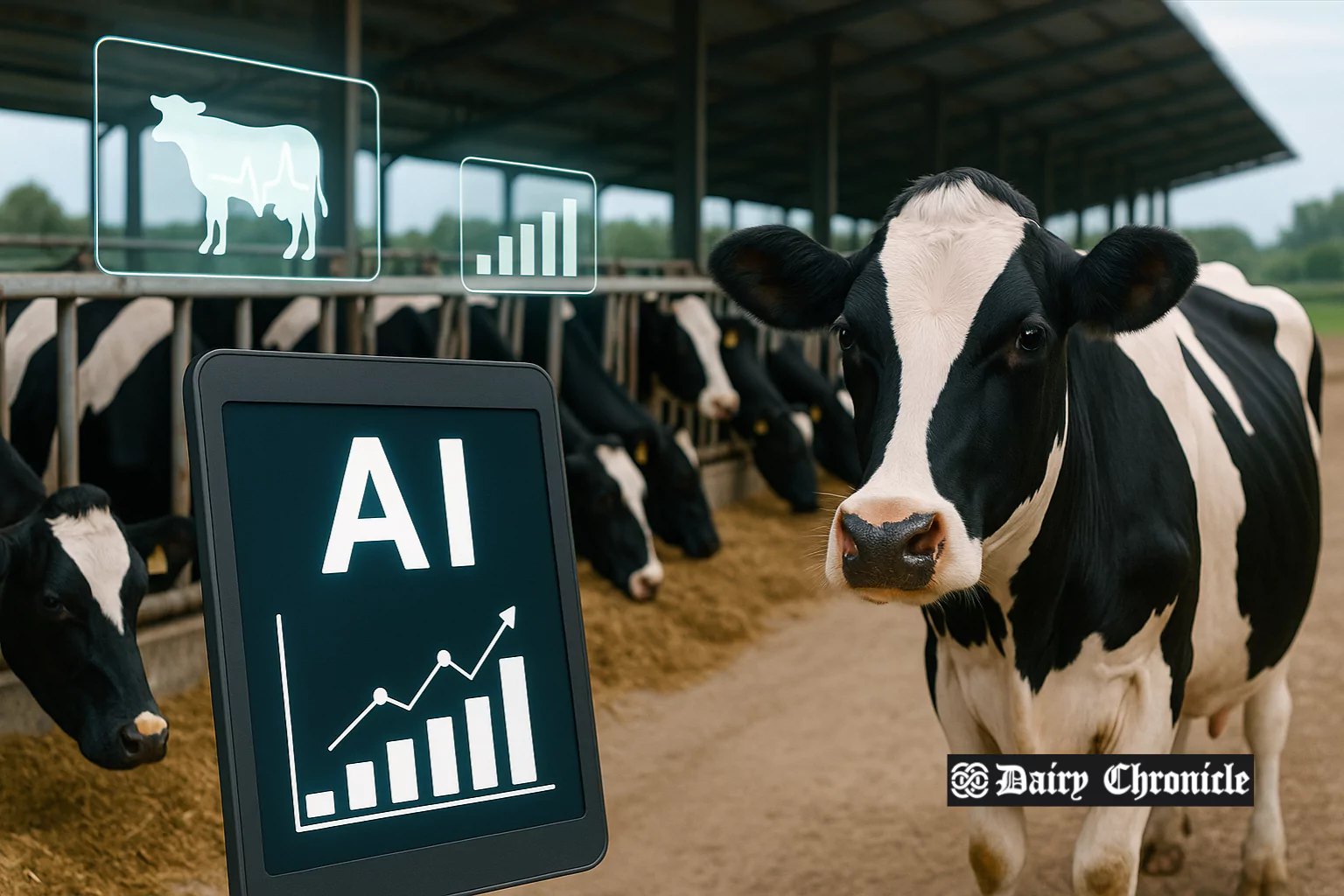
India is witnessing a transformative shift in its dairy sector as artificial intelligence (AI) redefines farm operations, enhances productivity, and promotes sustainable practices. Despite implementation challenges, the technology is proving essential for future-ready dairy businesses.
Artificial Intelligence (AI) is emerging as a game-changer in India’s dairy industry, driving a data-centric approach that is redefining how milk is produced, processed, and delivered. With rising consumer demand and pressure to reduce environmental impact, AI is rapidly becoming a strategic investment for dairy businesses looking to scale sustainably.
Industry analysts highlight that the integration of AI is enabling real-time decision-making by consolidating data from various sources including IoT sensors, automated milking systems, and herd management software. These systems can detect early signs of diseases like mastitis or heat stress in dairy cattle, drastically reducing veterinary intervention costs and improving overall herd health. Moreover, predictive analytics now aid in feed optimization, reducing wastage while enhancing milk yield per cow.
From a financial perspective, this transformation has tangible bottom-line benefits. Farms adopting AI-based systems are reporting improved resource allocation with optimized labor and inventory management. For instance, AI-powered forecasting helps farms balance milk production with demand, minimizing overproduction-related losses and ensuring stable revenue streams.
Operational efficiency is another major driver. AI tools are automating routine yet data-heavy processes such as milk quality testing, herd tracking, and logistics planning. Advanced route optimization is reducing delivery times and lowering fuel costs — translating to better cost-to-margin ratios in supply chain operations.
Sustainability has also moved from being a compliance concern to a profit-centered strategy, thanks to AI. Farms using AI-driven systems are managing water use more precisely and deploying AI-optimized manure treatment solutions that reduce methane emissions. These advancements are paving the way for future monetization through carbon credits and improved ESG scores, both of which are attracting interest from institutional investors focused on climate-aligned agriculture.
However, challenges such as infrastructure gaps, high initial capital outlay, and the need for skilled AI talent remain. Data privacy and ownership are also emerging as key risks as farms increase their digital footprint. Despite this, the return on AI investment (ROAI) in the dairy sector is improving steadily as technology becomes more affordable and scalable.
As India pushes toward doubling farmer income and expanding agri-export capacity, AI stands out as a critical enabler. Experts emphasize that dairy businesses that prioritize digital transformation today are likely to emerge as market leaders tomorrow — resilient, transparent, and environmentally responsible.