


The United States is witnessing an enormous surge in alternative milk products based on plants. The main drivers of this demand are concerns for health, ethics, and the planet’s welfare. Despite these booming trends, there are still several issues in the area of stabilization, taste, and allergens, which are the major sources of continuing innovation in the sector.
In recent years, the United States has seen a growing trend in plant-based milk alternatives (PBMAs) consumption. The prime reasons for this trend are the rising cases of lactose intolerance, the emergence of a health-conscious society, and the demand for environmental sustainability. The oat, soy, nut, seed, and legume-based options are no longer just the alternatives to the traditional dairy, which continues to be heavily criticized for its high cholesterol content and the ethics involved in the production process, but they are also being presented as the consumers healthier and eco-friendlier substitutes. However, their increasing fame has not yet allowed plant-based milk to solve all the technological issues and to gain the full acceptance of the consumers.
Market Growth and Consumer Drivers
The PBMA segment in the United States has experienced double-digit growth for the last few years. This consumer trend has been closely coupled with the demand for clean-label, and the naturalness of the products. In fact, Millennial and Gen Z consumers are the main driving forces behind sustainability and ethical consumption that are the cornerstones of PBMA demand.
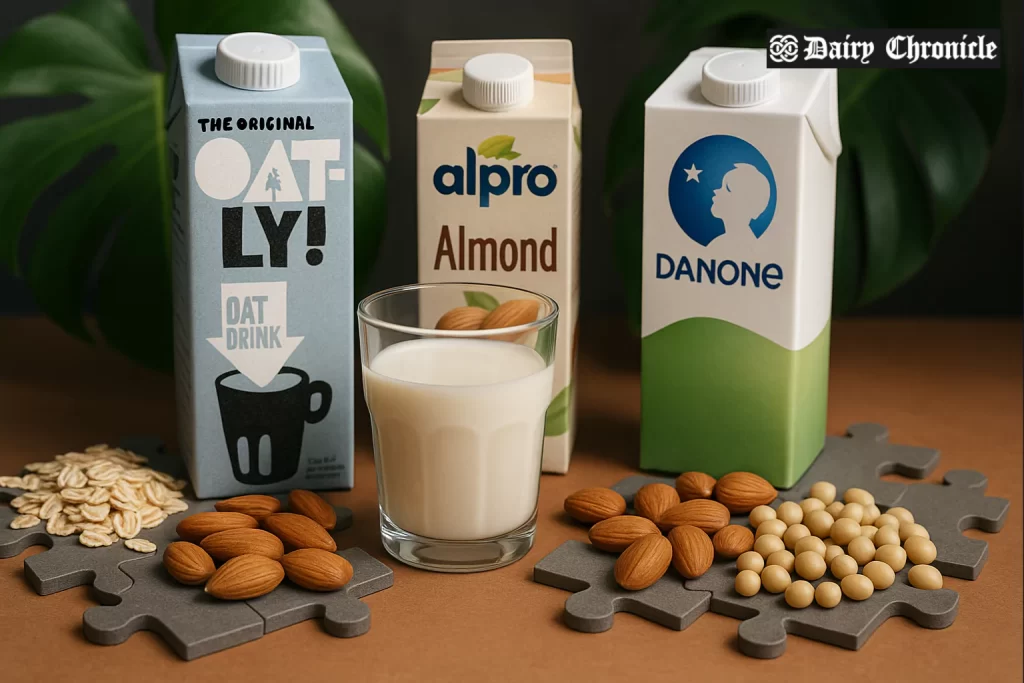
International firms like Oatly, Alpro, and Danone have expanded their American market presence to indicate not only fierce rivalry but also the chances of the startup and established dairy companies collaborating.
Challenges in Plant-Based Milk Development
Despite strong demand, the industry in the United States faces problems with the development of consistent and nutritionally fortified PBMAs. Pointing to the key issues the industry faces:
- Stability Problems: Plant-based milk is usually affected by sedimentation and separation, which lowers the attraction of the milk to the eye of the consumer and hence less consumer interest.
- Unpleasant Odors: Soy, oats, and nuts natural components can produce bitter or beany tastes.
- Allergens: The addition of soy, nuts, and gluten in food increases the improper allergen risk that will cause not only limiting the universal appeal for consumers but also the exclusion of allergic people from consuming these kinds of products.
- Antinutrients: Some grains and legumes have compounds that hinder the absorption of nutrients contained in them.
- Sensory Gaps: Imitating dairy’s creaminess and texture is still a technology challenge.
Also Read: Vitalite Throws Out ‘Plant-Based’—Here’s What That Means
Technological Innovations Driving Solutions
Scientists find solutions to such kinds of challenges by adopting various technologies.
- Enzyme-Assisted Extraction: The method caters to the need for protein recovery while cutting the amount of antinutrient simultaneously.
- Fermentation: Makes the product more digestible, and sweeter with a better texture.
- High-Pressure Processing (HPP): A method to extend the shelf life of a product without adding chemical preservatives is by HPP.
- New Blending Techniques: Mixing various plant sources achieves nutrition and taste balance.
These innovations make it possible for companies to satisfy the demand for clean-label products while reducing their need for synthetic fortification.
Financial Outlook and Industry Trends
The financial evolution of the PBMA market in the US is such that 2050 is seen as its next billion-dollar mark in sales over the next 10 years. Nevertheless, turning a profit will be influenced by the following two:
- Cost Effectiveness: The technologies for processing still remain pricey, which corresponds to the retail price of the products.
- Consumer Loyalty: The consumer’s coming back is dependent on the sensory and nutritional aspects being improved.
Startup innovation is the main asset for the industry, whereas the dairy companies investing in plant-based products have better logistic and financial resources for targeting the market in a short time.
The Role of Blended Plant-Based Milks
The blended PBMAs like oat-soy or almond-rice combinations are gaining ground as a solution to the issue. Protein quality is brought up to standard on blended companies by raw materials; flavors become balanced, and allergenics are reduced. By blending, milk is considered a closer substitute to the traditional milk for the US market allowing the milk market to expand progressively and consumers get choices.
FAQ’s
Q1. What is the biggest challenge in the plant-based milk market?
The main issues that plant-based milk has to go through are stability and sensory attractiveness. Consumers want their soy milk to be similar to cow's milk in terms of a creamy taste and a stable texture.
Q2. Are plant-based milks healthier than dairy?
Though they can be healthier, for instance, a lactose-intolerant individual would benefit from them, a person who is conscious of his cholesterol would also find them quite useful. The nutritional value of them varies on the basis of the content and the fortification.
Q3. How are companies addressing plant-based milk challenges?
They are utilizing such innovations as enzyme-assisted extraction, fermentation, and blended formulations to enhance nutrition, flavor, and stability
READ MORE ON
7 Comments
jo5yt9
ba9d0k
wpj6i4
jta5kq
3reyf7
tsz9is
iggz1m