


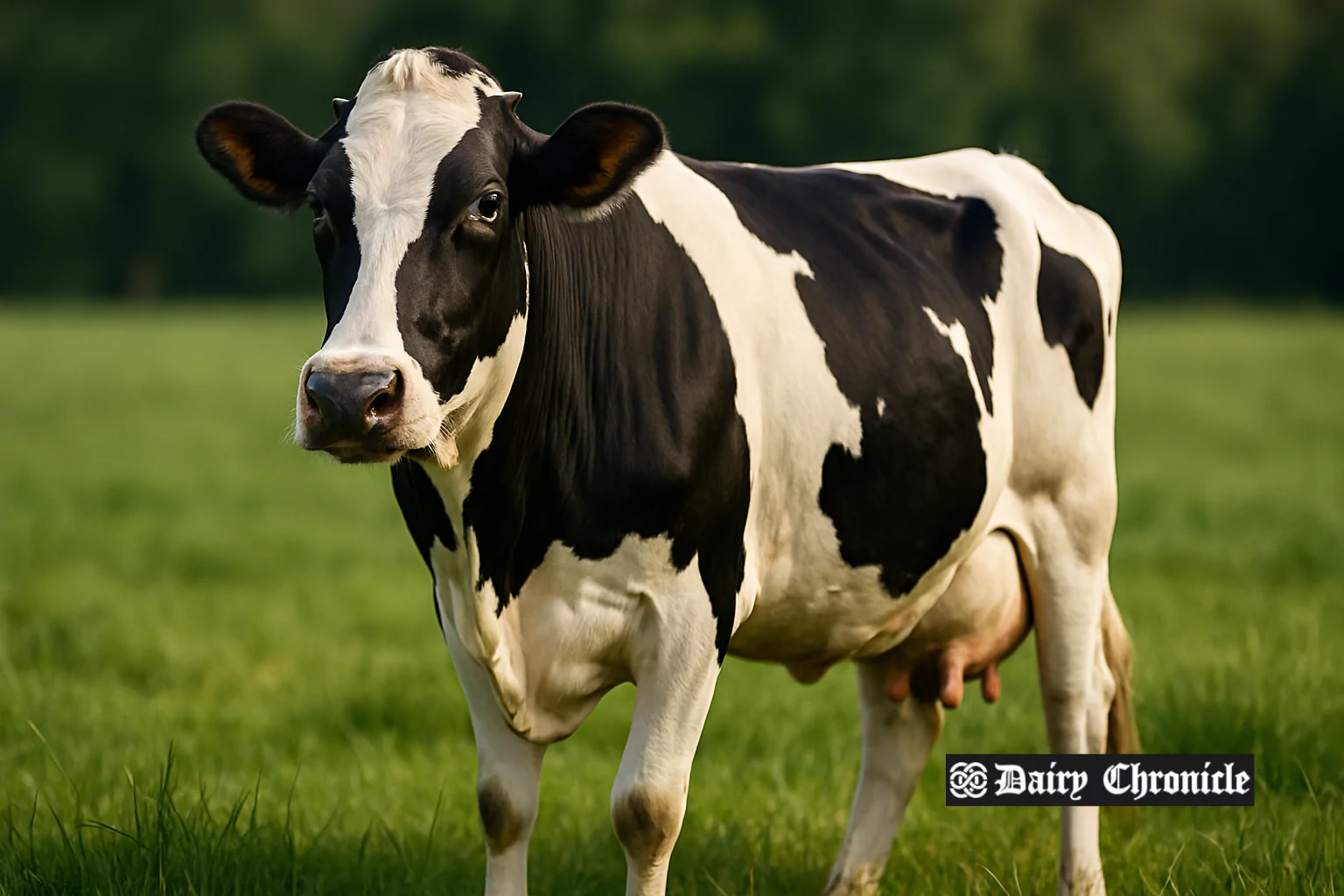
The Goa government, in collaboration with the Goa Milk Union and ICAR’s Project Directorate on Cattle, is introducing the Frieswal breed to boost local milk production. This initiative aims to reduce the state’s dependence on milk imports by increasing per-animal productivity through improved genetics, infrastructure, and pilot programs.
In a focused effort to revitalize its struggling dairy sector, the Government of Goa has initiated a large-scale promotion of the Frieswal breed—a cross between the high-yielding Holstein Friesian and the heat-tolerant Indian Sahiwal. The initiative is being executed in partnership with the Goa State Cooperative Milk Producers’ Union Ltd. (Goa Milk Union) and backed by the ICAR-Project Directorate on Cattle, a premier research institute under the Indian Council of Agricultural Research.
The Frieswal breed, known for producing around 3,000–4,000 litres of milk per lactation, is considered ideal for Indian climatic conditions. Goa, which has long suffered from low average milk yields and is dependent on imports to meet local demand, sees this breed as a viable solution for self-sufficiency.
To support the program, the state government is strengthening artificial insemination (AI) services, modernizing breeding infrastructure, and closely tracking animal performance through pilot programs. According to officials from the Goa Milk Union, initial trials with Frieswal cows are already underway and results will determine the pace of scale-up.
This local push aligns with broader national efforts under the Rashtriya Gokul Mission, aimed at conserving and developing indigenous bovine breeds. The initiative also supports the National Dairy Development Board (NDDB)’s long-term goal to enhance productivity per animal, especially in low-output regions like Goa.
Experts believe the Frieswal strategy could become a model for other coastal or low-production areas, where climatic stress and fragmented dairy infrastructure hinder progress. “It’s a smart approach—leveraging a breed that offers both yield and climate adaptability,” said a senior NDDB official.
If successful, the project could not only plug Goa’s demand-supply gap but also serve as a replicable template for other Indian states looking to upgrade dairy productivity through scientific breeding and focused policy support.
8 Comments
1iluvo
gtt9u6
5px9ua
ohtgl1
jfumh7
rpan82
l993fj
28dlxg