


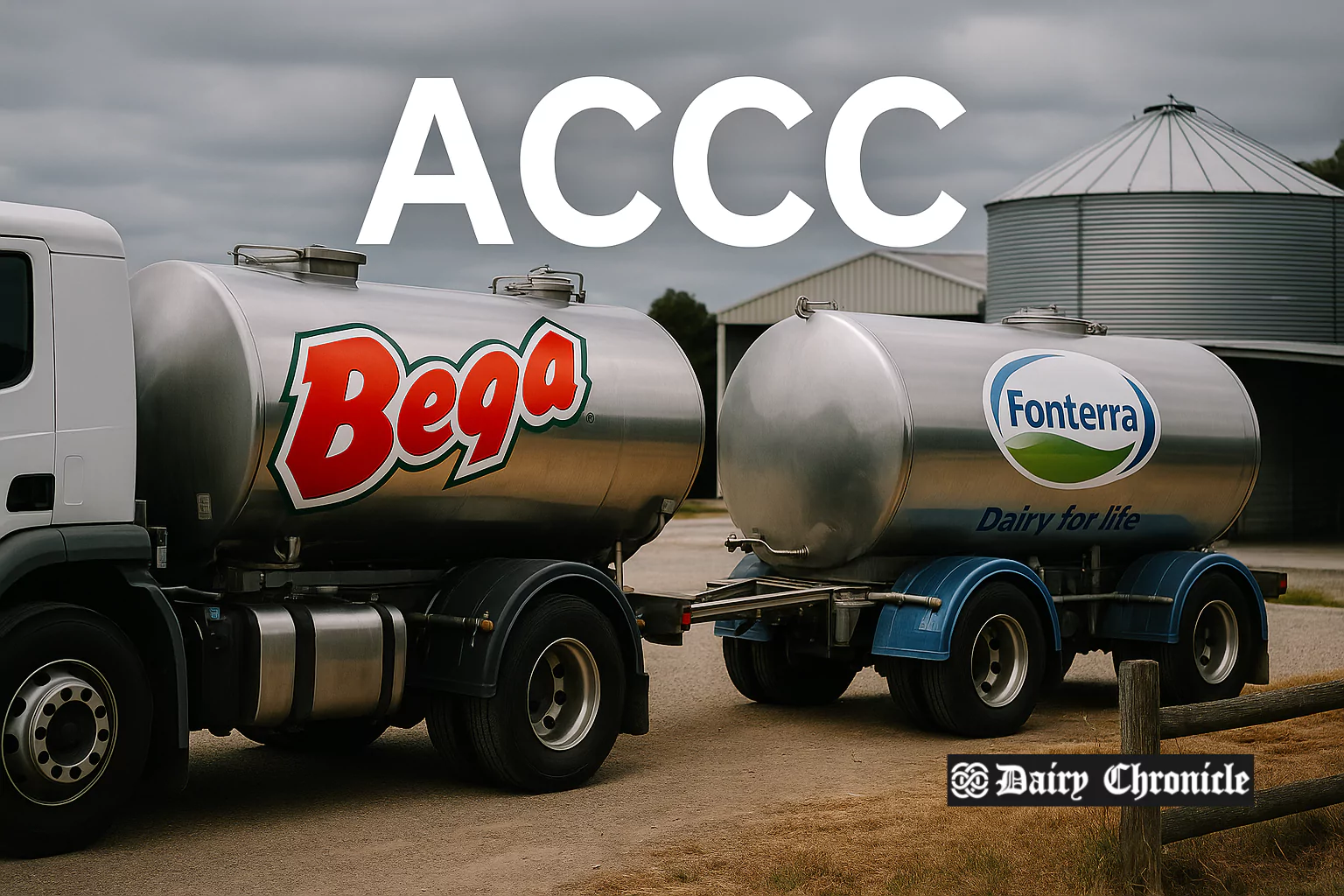
The Australian Competition and Consumer Commission (ACCC) has yet to begin its informal review of Bega Cheese’s proposal to acquire Fonterra Oceania’s Mainland Group assets, leading to uncertainty around the high-profile dairy deal. While Bega emphasizes local ownership and industry impact, the delay raises concerns amid competitive divestment strategies by Fonterra.
The proposed acquisition of Fonterra Oceania by Bega Cheese Ltd. is facing regulatory uncertainty, as the Australian Competition and Consumer Commission (ACCC) has yet to begin its informal review process—sparking speculation about the fate of one of the country’s most significant dairy asset transfers in recent years.
Based in New South Wales, Bega Cheese Ltd. is a leading Australian-owned dairy and food company known for its commitment to local communities and regional producers. The company has shown strong interest in acquiring the Mainland Group—a business unit under Fonterra Oceania, part of New Zealand’s global dairy co-operative Fonterra.
Although Bega submitted its application for informal merger clearance in mid-June 2025, the ACCC has yet to initiate the review, in stark contrast to its faster handling of similar past cases—such as the clearance granted to Lactalis for its prior acquisition in the dairy space.
Bega’s CEO, John Hartman, expressed concerns about the regulatory delay, noting that as a fully Australian-owned entity, Bega does not require Foreign Investment Review Board (FIRB) approval. Hartman emphasized the strategic value of local ownership in safeguarding the interests of regional dairy farmers, processing jobs, and Australian consumers.
“The acquisition would reinforce Bega’s longstanding mission to build a resilient, competitive dairy industry rooted in Australian values,” Hartman stated.
Meanwhile, Fonterra, which is divesting these assets as part of a broader strategy to deliver value to its farmer-shareholders, has kept the bidding process confidential and competitive. Their focus remains on achieving optimal outcomes through a streamlined exit of certain Australian operations.
This regulatory pause by the ACCC adds layers of complexity to an already sensitive and high-stakes transaction in Australia’s dairy sector. The longer the delay, the more uncertain the transaction’s outcome becomes—not only for the companies involved but for the broader supply chain and rural economies connected to them.
With Australia’s dairy landscape rapidly evolving, stakeholders now await whether the ACCC will take a decisive step or keep the industry in suspense.