


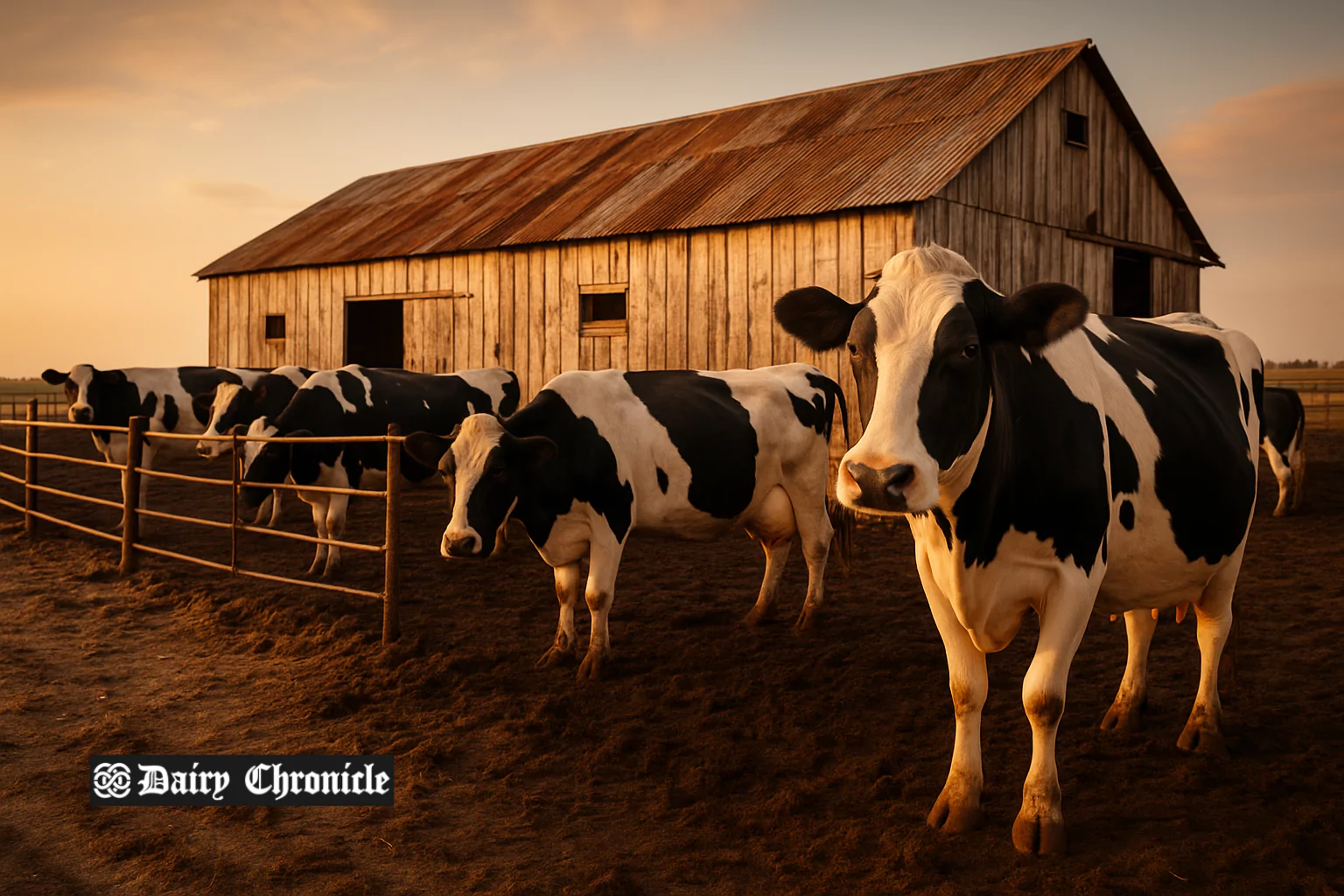
Argentina’s dairy industry continues to shrink, with 90 farms closing in the first five months of 2025. The shift toward fewer but larger operations highlights a growing trend in dairy consolidation, especially in key states like Santa Fe and Córdoba.
Argentina’s dairy industry is witnessing an ongoing consolidation, with 90 dairy farms closing down in the first five months of 2025. This trend reflects a shift toward fewer, larger farms dominating the national milk supply, particularly in the Central Dairy Basin covering Santa Fe, Córdoba, Buenos Aires, and Entre Ríos.
According to the latest data, Argentina now has only 9,039 dairy farms, a stark decline from 30,000 in 1988. Despite the closures, the overall number of dairy cattle has slightly increased by 0.55%, indicating a shift toward more intensive and larger-scale operations.
The Central Basin continues to be the stronghold of Argentina’s dairy activity, housing 91% of dairy farms and 95.7% of the national dairy herd. The trend is clear: farms with over 500 cows—which represent just 6.7% of all farms—now hold 28.8% of dairy cows and produce more than one-third of Argentina’s total milk.
If closures proceed at the current rate, the country could see a 2.4% annual drop in farm numbers by the end of 2025, mirroring the average yearly decline over the past decade.
This concentration of cattle into fewer, larger farms is not unique to Argentina. It’s a global trend driven by economies of scale, higher productivity expectations, and challenges faced by small-scale producers.