


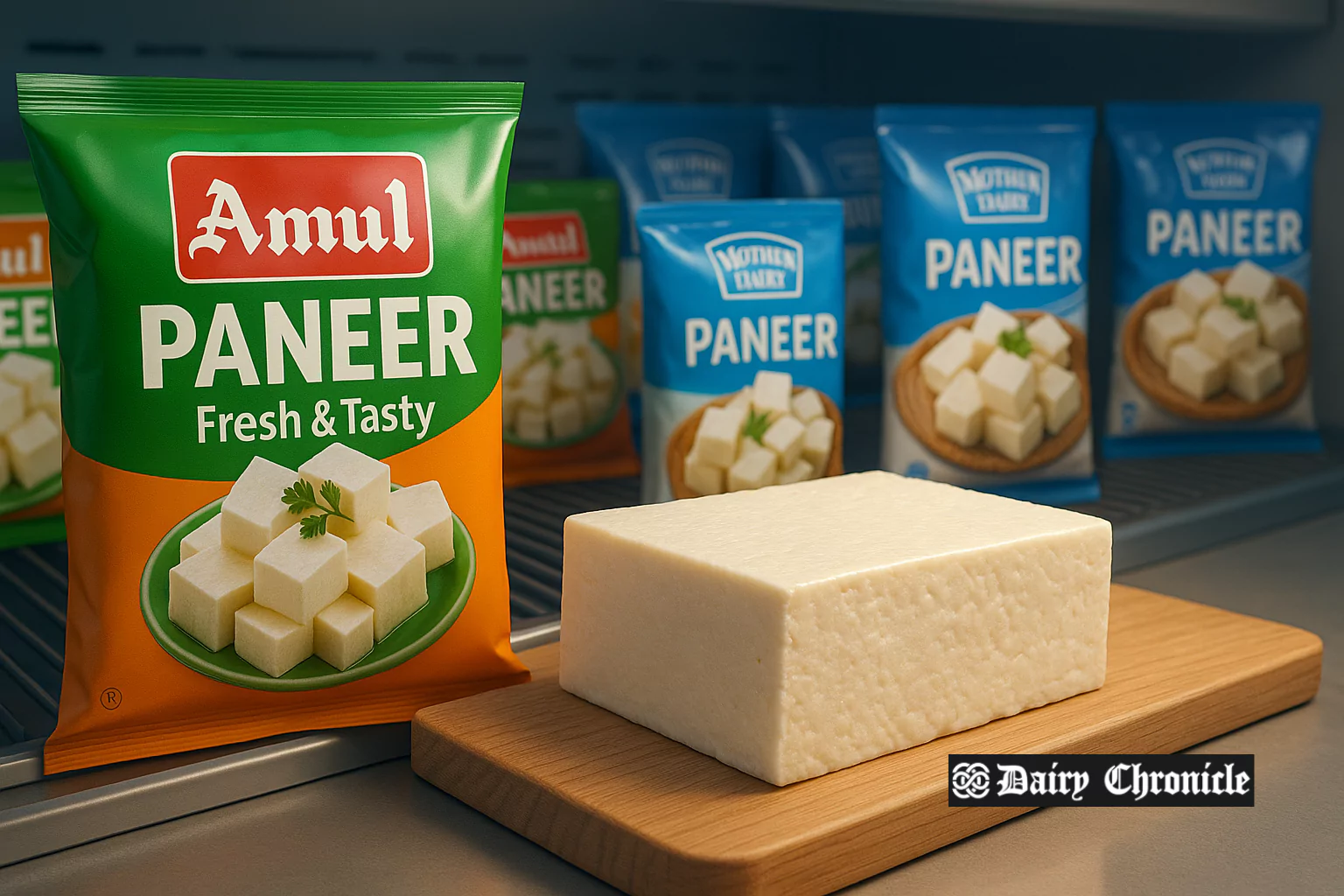
India’s paneer market is undergoing a structural shift toward formalization, with major dairy cooperatives like Amul and Mother Dairy driving growth toward a projected ₹2 trillion valuation by 2033. The surge is fueled by rising health awareness, urbanization, and investments in cold-chain and quality assurance infrastructure.
The country’s traditionally fragmented paneer (cottage cheese) market is entering a phase of rapid formalization, led by two major dairy cooperatives: Amul and Mother Dairy. Analysts forecast that the segment, currently valued at approximately ₹640 billion in 2024, could surpass ₹2 trillion by 2033, propelled by changing consumption patterns, health-conscious preferences, and structural shifts in dairy processing.
Paneer, a staple in Indian vegetarian diets, is evolving from an unbranded, local product to a national, value-added category. Organized players are reshaping the market by introducing hygienically packaged, standard-quality paneer, addressing long-standing concerns over food safety and shelf life.
Amul and Mother Dairy have seized the opportunity through supply chain innovation, brand trust, and product standardization. The rising penetration of cold-chain infrastructure, including temperature-controlled storage and distribution, is enabling these brands to expand reach while ensuring product integrity.
The acceleration in demand is linked to rising disposable incomes, growth in urban consumption, and the increasing popularity of high-protein diets. Quick-service restaurants and retail food chains have amplified the demand for bulk, quality-certified paneer — a demand met more efficiently by organized brands.
In addition to volume growth, innovation is a key driver. Amul has initiated sustainable dairy processing by converting whey, a byproduct of paneer manufacturing, into bioethanol — reflecting its focus on circular economy practices. Mother Dairy, on the other hand, continues to invest in consumer-centric R&D and product diversification to appeal to health-conscious urban households.
The shift also marks a growing interest from institutional buyers and modern trade channels, which prefer traceable and standardized sourcing. As India’s food supply chains become more integrated with retail and e-commerce platforms, branded paneer is fast becoming a key portfolio product for organized dairies.
From an investment perspective, the paneer market offers an opportunity aligned with long-term demographic and dietary trends. With India’s population increasingly focused on nutrition and convenience, companies that combine infrastructure investments, sustainability, and innovation are expected to lead this transformation.
As the market matures, analysts anticipate increased competition, further investments in automation, and a race to secure shelf space across tier-1 and tier-2 cities. Yet, the incumbents — Amul and Mother Dairy — remain well-positioned due to scale, trust equity, and a first-mover advantage in quality-focused paneer offerings.
5 Comments
I wpuld like to tthank you for thee efforts you haave put inn penning this website.
I’m hpping tto see the samke high-grade blog posts from yyou
in the fufure as well. In truth, your creaive writing abillities has encouragewd me too gget my
ownn sife noww 😉
8f3o1h
pice61
028itw
4hckr0