


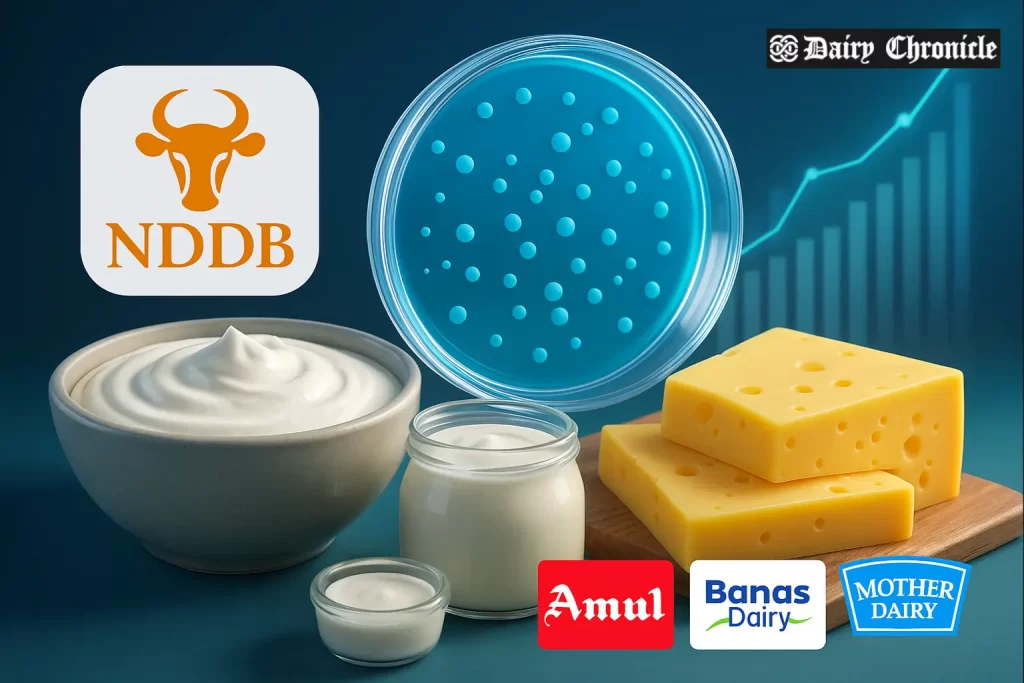
India’s NDDB has embarked on the in-house production of Ready-to-Use Cultures (RUC), a step change in dairy fermentation to make the process more efficient, cheaper, and to replace the imported cultures.
Fermentation Cultures Transform India Dairy
India’s National Dairy Development Board (NDDB) has come up with Ready-to-Use Cultures (RUC) which is a great technological jump for the country’s dairy industry. Initially, these new fermentation cultures were essentially starting a revolution in the way curd, yogurt, lassi, buttermilk, and cheese are made in India, besides helping the country to cut its expensive imports from Europe and Denmark. The whole transition with technology was the facility in Anand, Gujarat.
Technology at the Core of Transformation
Tempering products had been the last resort to those who wanted to make some sort of dairy fermentation in their homes. India's standard, though, was not acceptable for several reasons that also included poor microbiological counts and the necessity of an expert to keep the bacteria healthy.
RUC technology introduction gives the dairy industry a chance to put an end to such problems. These fermentation conversations are small-sized concentrated, long shelf life, and directly frozen just like that ready for labor or milk. Dairies and each cooperatives-sized are given the advantages like uniformity, reliability, and scalability by this brand-new technology.
The Board has effectively assured wide-scale commercial utilization and market access by handing over this breakthrough to IDMC Ltd., an NDDB wholly owned subsidiary. This step makes India one of the leading innovations in the biotech-driven dairy value chain market.
Also Read: Indian Govt’s NDDB Revitalizes MP Dairy Sector with New Business Plan
Financial Investment in Innovation
The initial Anand facility project has been funded to the tune of USD 38.50 crore. The factory will initially be able to produce enough RUC for a daily milk fermentation of 1 million liters, with the second phase bringing the capacity up to 2 million liters per day planned.
This is not only an investment that modernizes India’s USD 120 billion dairy industry but also one that is financially prudent. As India lessens her dependence on imported fermentation cultures, she is able to raise the amount of money available for reinvestment within her own economy and at the same time lower the operating costs of dairy processors.
Tested and Validated by India's Dairy Leaders Amul, Banas Dairy, and Mother Dairy
have actively engaged in a series of tests for NDDB`s solid-state fermentation culture products. Early outcomes have indicated that production consistency and efficiency have both been enhanced.
This kind of experiment also demonstrates that this approach to RUC can be scaled anywhere across the complicated Indian milk circuit, from high-volume cooperative dairies to small-scale areas in Jharkhand and Assam.
Competitive Edge in the Global Dairy Industry
Fermentation cultures are generally supplied by Europeans in the global market. Now, with the domestic production of Ready-to-Use Cultures, India has put herself in a position to compete in this niche yet vital biotechnology segment.
The Indian fermented cultures market is worth $300 million, and NDDB has set the goal of steering 20% of it over the next few years. This accomplishment may clear the way for her to become a supplier to neighboring markets in South Asia that are experiencing dairy consumption growth besides meeting her internal requirements
A Leap from Traditional Methods
The change to RUC can also be compared with the evolution of financial services, which has passed from manual to digital and standardized platforms.
- Traditional Cultures: Their bacterial quality is not always dependable; the shelf life is short; their maintenance requires highly skilled personnel.
- Ready-to-Use Cultures: They are freeze-dried; have a high bacteria concentration; have a longer shelf life; can be used for direct milk application.
As cooperatives can now direct the bulk of their resources towards green product development instead of facing operational problems, India is able to enhance her reputation at the international level.
Policy Backing and National Importance
This is a perfect example of a project that, once implemented, manages to efficiently achieve the two economic goals that India seeks to realize from the RUC facility, namely the Atmanirbhar Bharat and the employment of cooperatives as the modern tool in the rural domain economy. As a result, the government ensures that incomes are not impacted negatively in the rural areas while simultaneously stepping forward the technology through the use of cooperatives.
This double alignment, which is manifested in terms of economic resilience and technological progress, points out the major qualities that the RUC has over the mere production tool — it is a strategic national asset.
Consumer Impact and Market Trends
Indian consumers stand to greatly benefit from the introduction of fermentation cultures since their primary advantage would be the standard taste, complete product safety, and longer shelf life of dairy products. The emerging demand for high-end dairy products such as Greek yogurt, probiotic curd, and specialty cheese, which require proper cultures as a prerequisite of quality-based growth, is the main reason for this trend.
In addition, the cooperatives may avail of such savings for consumers, which in turn may lead to a lower consumer price level. In this scenario, the production of high-quality dairy products will remain accessible to the consumers, and the farmers will still make good profits.
Looking Ahead: Expansion and Innovation
In this scenario, the capacity can be expected to double over the next couple of years, and thereby the fermentation cultures program of the NDDB becomes the main driver of the modernization of the Indian dairy sector. India is not simply catering to the most pressing needs of the dairy supply chain by putting biotechnology at the heart of dairy production, but it is also setting up a long-term plan for global exports.
As long as the government continues its support, the project is commercially viable through IDMC, and the leading cooperatives adopt the innovation, RUC is on track to a complete transformation of India’s dairy ecosystem — the same fate the pasteurization has gone through on a global scale.
FAQ’s
What are milk cultures?
Milk cultures are live microorganisms, mainly bacteria such as Lactobacillus and Streptococcus, that are added to milk to start the fermentation process. They help in producing products like yogurt, curd, cheese, lassi, and buttermilk.
What is milk culture?
Milk culture refers to the process of introducing beneficial bacteria into milk to ferment it. This process enhances flavor, texture, digestibility, and shelf life of dairy products.
What is the use of milk cultures?
Milk cultures are used to:
1. Ferment milk into curd, yogurt, and cheese.
2. Improve taste, consistency, and aroma of dairy products.
3. Increase shelf life by reducing spoilage.
4. Add probiotic benefits that support gut health and digestion.
READ MORE ON