


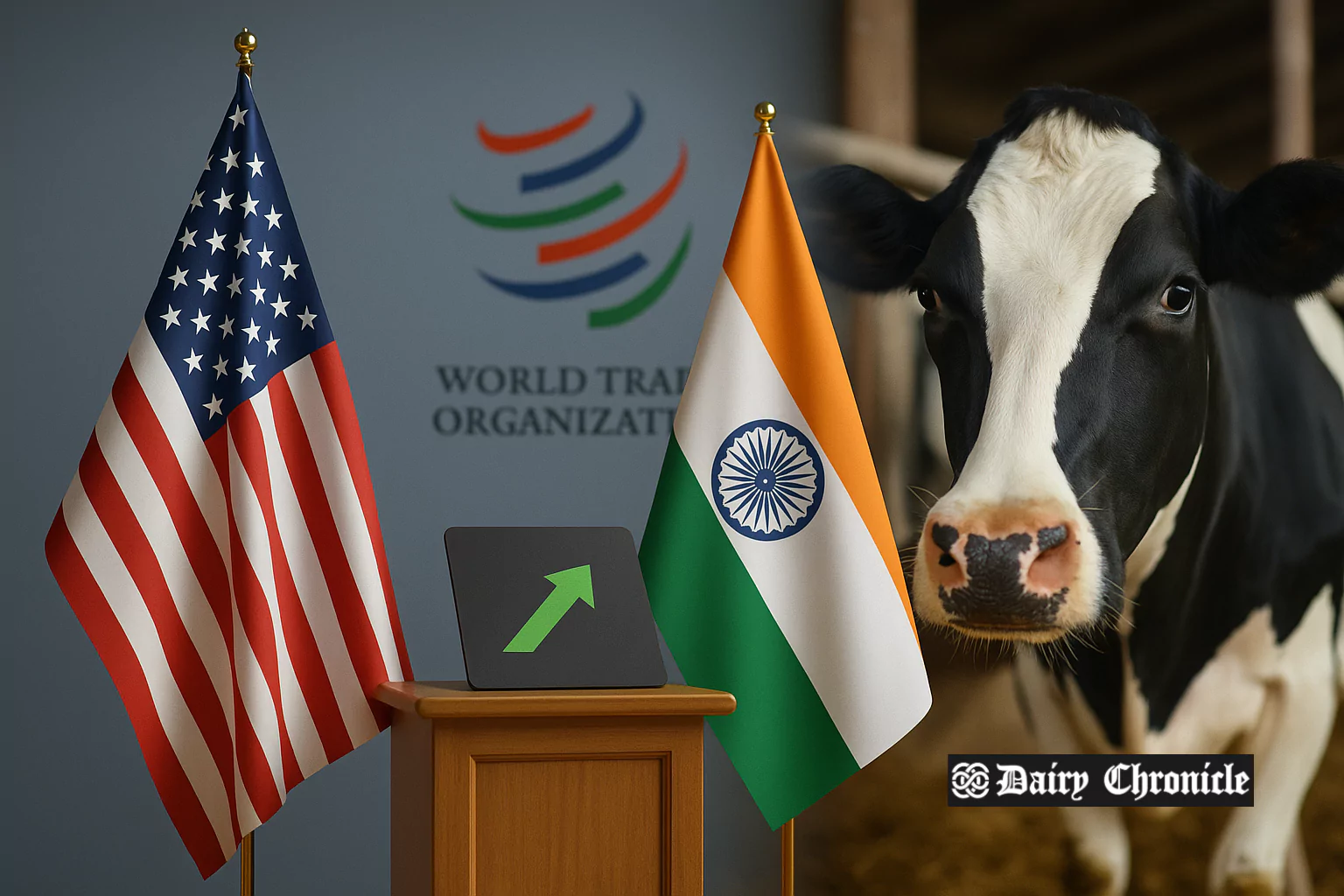
The United States has formally objected to India’s dairy import certificate rule at the World Trade Organization (WTO), terming it an unjustified trade barrier. The rule requires dairy imports to be certified antibiotic-free and sourced from animals not fed animal protein. The objection highlights growing trade tensions between both countries and could affect dairy trade access and costs.
The United States Trade Representative (USTR), a US government agency responsible for developing and coordinating US international trade policy, has formally raised concerns at the World Trade Organization (WTO) against India’s veterinary-health certificate requirements for dairy imports. The US claims the regulations act as a non-tariff barrier to trade, particularly disadvantageous American dairy exporters.
The Indian policy mandates that imported milk and milk products be certified as free from antibiotics, pesticides, heavy metals, and sourced from animals not fed animal-based proteins. These rules, according to Washington, do not align with international norms and lack adequate scientific justification.
In its submission to the WTO, the USTR urged India to revise its import standards in line with its national treatment obligation under WTO rules. The US emphasized that while public health protections are valid, they must not unfairly restrict market access or create discriminatory barriers.
This isn’t the first instance of trade friction between the two nations in the dairy sector. The 2025 National Trade Estimate Report on Foreign Trade Barriers, released by the USTR earlier this year, also flagged India’s high tariffs on agricultural products and restrictive import protocols, calling them major challenges for US exporters.
India, on the other hand, has consistently defended its stringent dairy import norms, citing public health, food safety, and cultural sensitivities. The country’s dairy industry, largely vegetarian in orientation, has historically prohibited the use of animal-based feed for dairy cattle—a principle now embedded in its import conditions.
While the WTO has not yet ruled on the matter, trade analysts suggest that the dispute could influence future negotiations between India and the US, especially in the context of broader trade agreements and agriculture market access.
Dairy importers and exporters in both countries are advised to monitor the proceedings, as potential policy shifts may impact product pricing, regulatory compliance, and cross-border trade dynamics in the dairy sector.