


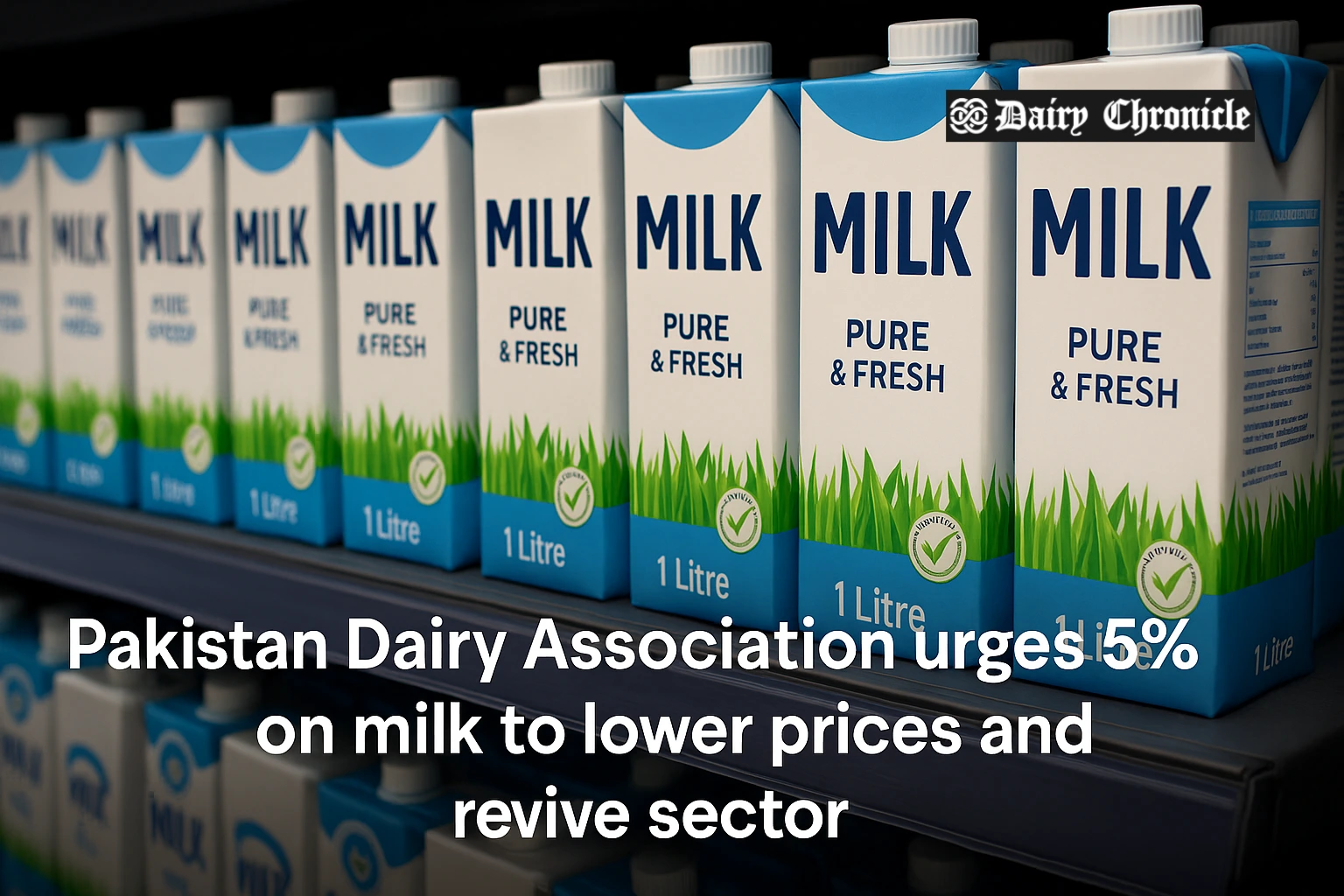
In Pakistan, the Pakistan Dairy Association (PDA) has proposed a major tax reform, recommending a reduction in the sales tax on packaged milk from 18% to 5% in the upcoming 2025–26 federal budget. The association promises this move would lower milk prices by Rs 50 per litre, boost sales volume, and increase revenue collection while curbing the informal market.
The Pakistan Dairy Association (PDA) has formally proposed a reduction in the current 18% sales tax on packaged milk to just 5%, in the upcoming federal budget for 2025–26. According to the association, this change would immediately reduce the price of milk by Rs 50 per litre for consumers, while improving volumes and government revenue.
Chairman Usman Zaheer Ahmad stated that since July 2024, milk sales have dropped by 20% following the tax hike, causing financial stress for producers and consumers alike. The association also noted that around 500 milk collection points were forced to close as a result.
The association claims that the Rs 13 billion collected in taxes in 2023 surged to Rs 44 billion in 2024—but may now fall due to declining sales. It projects that a 5% GST could increase sales volume by 20% and enhance tax revenue by 22% year-on-year. This would also encourage further investment in dairy farms and processing plants, strengthen exports, and shrink the size of the unregulated loose milk market.
FrieslandCampina Pakistan and other industry players have voiced support for the proposal, warning that continued high taxes could lead to job losses, investment freezes, and lower public health outcomes. The PDA believes that formal-sector milk is not only safer and more nutritious but also essential in improving national health indicators.
The PDA emphasized that most global markets treat milk as an essential item and either exempt it from sales tax or impose very minimal rates. It urged the government to consider the long-term gains of tax relief both for consumers and the formal dairy industry.
The proposed tax cut is expected to be reviewed as part of the fiscal planning process for July 2025 onward.