


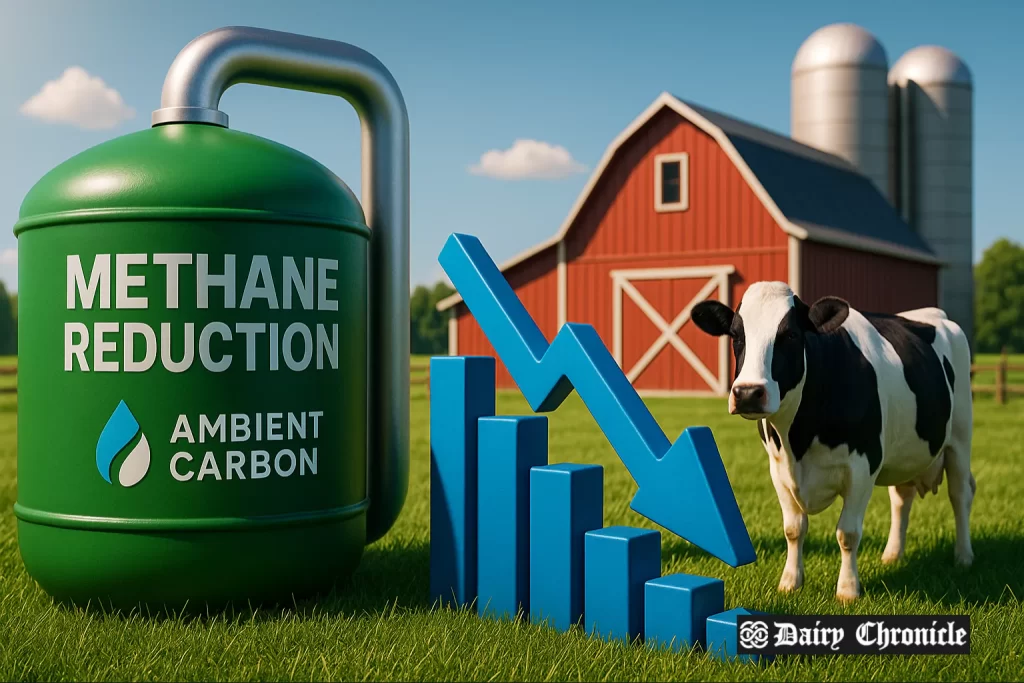
Ambient Carbon In the US has developed a new methane-reduction technology for dairy farms which is able to reduce emissions upto 90%. The invention helps to sustain the financial and environmental viability of the dairy sector and also contributes to the achievement of worldwide carbon targets.
A Game-Changer for U.S. Dairy Sustainability
The US dairy sector has to be more and more responsive. One of the main problems is the methane emissions, one of the major greenhouse gases. To be even more specific, as the agricultural sector accounts for most of the methane emissions worldwide, investors, as well as environmentally conscious people, are looking for solutions that drive both a reduction of carbon emissions and financial stability. A company called Ambient Carbon has come up with its Methane Emission Prevention System (MEPS), completely able to cut 90% of the methane emissions from dairy farms with their dilution.
This progress is a turning point for these milk producers in the sense that those who are managing their business carefully may have to face a dilemma between climate requirements and the climatic policies commitment by their investors.
Financial Aspect of the Milk Sector
Successfully addressing methane emission is no longer just a matter of saving the environment but rather is a financial obligation. The analysts say that investors are more concerned about the low carbon agriculture strategy and the company’s praiseworthy actions rather than just financial results. MEPS is just what the dairy business needs to be able to decrease scope 3 emissions which is one of the major ESG reporting parameters and that has a big effect on the ability to attract capital and lending conditions.
On the other hand, it will become a huge problem for the dairying industry. For them, the adoption of a solution like MEPS will mean reduction of methane emission and a series of advantages in the long term as well. By embracing this emission reduction strategy, farms could slay a few demons like the carbon tax or the issue of the farms paying carbon credits as a result of their excessive emissions. Plus, there is the possibility the company adopting this sort of technology would be more eager for the financing from banks and institutional investors who are transitioning toward the sustainability linked lending sector.
Also Read: Embryos vs. Extinction: Saving Colombia’s Cattle Industry
Technology Insights: MEPS in Action
Ambient Carbon’s MEPS system is perfectly integrated with the dairy barns and it captures the diluted methane at the same time it traps the ammonia from the liquid slurry. So far, this method not only helps in the reduction of greenhouse gas emissions but also contributes to the improvement of the air quality and slurry management, which in turn increases the efficiency of the farm.
Industry experts are telling the truth regarding the fact that there are many alternatives to emission reduction available which are still very expensive or at least operationally complex, however, MEPS gives them a feasible way for a proportionately large-scale and financially sustainable undertaking. Preliminary pilot tests have implied that the organization of workers in this field could produce results that pay for themselves, thanks to savings on regulatory compliance, the raising of market reputation, and potentially even through the earning of carbon credits through the sale of which.
The Broader Trend: Climate Alignment in U.S. Agriculture
U.S. milk production is being pressured from various sides to fit into the climate goals for 2030, which are targeting substantial reductions of methane emissions. The use of technology for reducing methane is going to be more and more widespread, due to the incentives which are given by the regulators, the pledges made by corporations on climate change, as well as the demand from consumers for products that are low on carbon.
Financial strategists see that the main advantages the pioneers in implementing technologies for methane reduction will get is not just over the aspect of complying with the regulations but also over their brand equity. Also, the retailers and food producers who are looking to buy milk from the most sustainable farms will be more willing in the future to establish collaborations with the latter.
Expert Commentary
Economic experts in the field of agriculture affirm that the fundamental point is the ability of MEPS to tackle the issues of the environment and the economy at the same time. In addition, farms with less emissions will be less exposed to the risks of climate change while at the same time, they will be able to have easier access to the financial circles. “Sustainability is not a cost center anymore—it’s a driver of financial growth,” remarked by an analyst.
Future Outlook
Milk-producing U.S. dairy farms in the country are major contributors to methane emissions, therefore, the adoption of technology by Ambient Carbon may considerably change the sustainability landscape of the industry. If it is widely accepted, it could lead to a drastic reduction of the sector’s impact on the climate while at the same time, it could allow for new dimensions of financial growth through ESG-linked investments.
The way ahead requires the dairy producers, investors, and policymakers to get on the same page to facilitate the large-scale administration and guarantee the survival of the industry in the long term.
FAQs
Q1: What is the working principle of Ambient Carbon’s methane techonology?
Ambient Carbon’s techonology collects dilute methane from the barns and captures ammonia from the slurry in order to lower emissions by up to 90%.
Q2: What is the financial significance of methane reduction for dairy farms?
Reduced emissions lower the risks of climate change, raise ESG ratings, and enable the farms to obtain green loans.
Q3: Is this technology capable of aiding dairy farms in accomplishing the U.S. climate objectives?
Indeed, the extensive use of technology supports national methane goals and enhances the dairy sector’s sustainability profile.
READ MORE ON
9 Comments
v1u19w
0fmcir
pcdtv8
4v5mwr
ysk0qp
90yvku
6i78sl
cmt3z3
kt1per